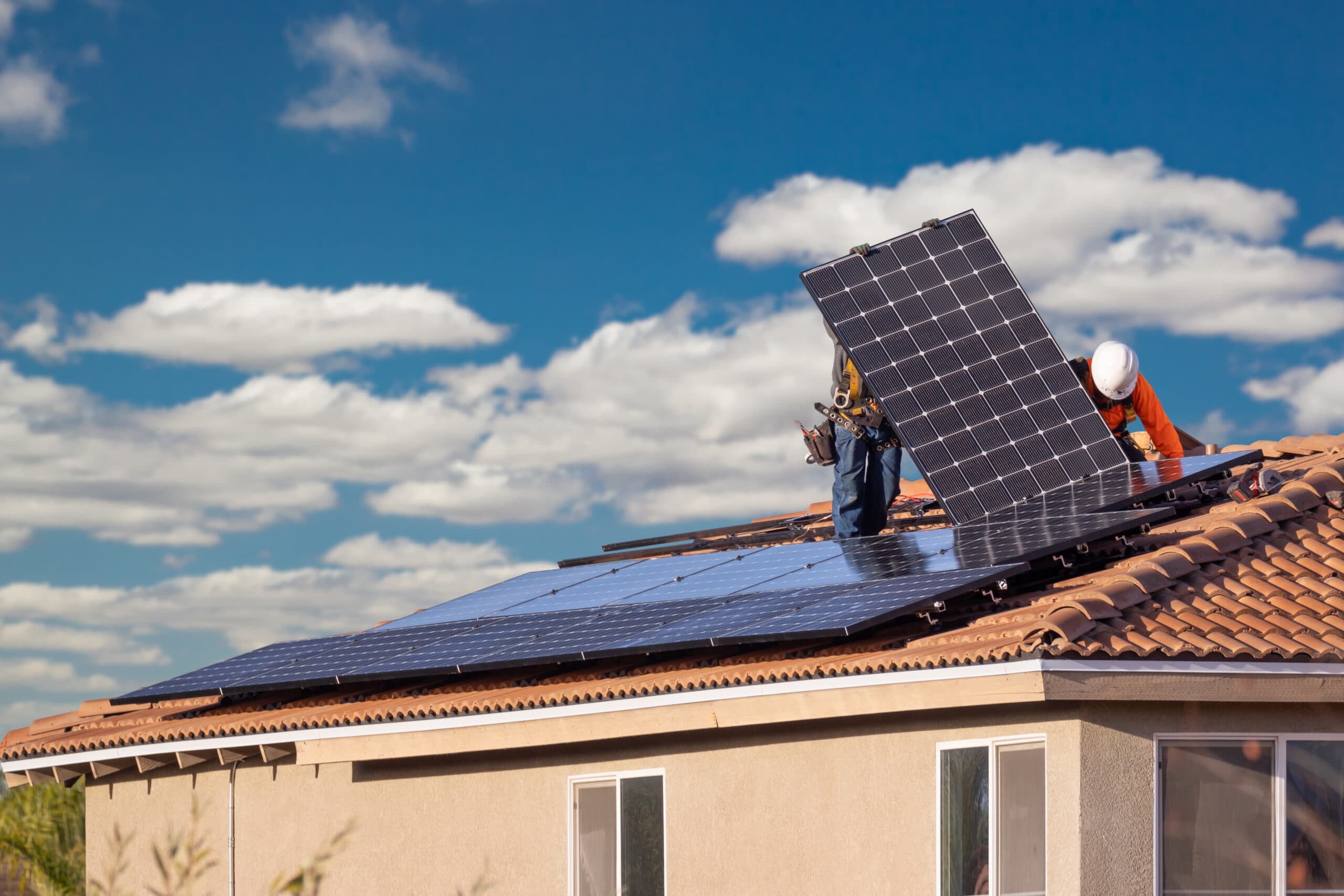
What is a prepaid solar lease?
A prepaid solar lease lets you pay for your solar system upfront, or finance that cost, while a solar company owns and maintains the panels for a short period, after which you can buy the system outright. It’s one of the fastest-growing solar financing options in 2026.
If you’ve been shopping for solar lately, you’ve probably heard the term “prepaid lease” come up. It’s relatively new, and it’s catching on fast — nearly half of solar sales professionals now offer it, and it’s become a go-to option for homeowners who want the economics of ownership without immediately taking on full responsibility for the system.
Here’s a plain-English breakdown of how prepaid leases work, how they compare to other financing options, and whether one might be right for you.
In this article:
- What is a prepaid solar lease?
- How does it differ from a traditional solar lease?
- How does it differ from buying outright?
- Why are prepaid leases popular in 2026?
- Who is a prepaid lease right for?
- What to watch out for
- Frequently asked questions
What is a prepaid solar lease?
A prepaid solar lease is a financing arrangement where you pay the cost of a solar system upfront — either in cash or through a loan — instead of making monthly payments for 20+ years.
Here’s how it works in practice:
- You pay the system cost upfront (or finance it through a loan)
- A solar company installs and technically owns the panels
- The company handles maintenance and service during the lease term — typically five to six years
- At the end of that window, you have the option to purchase the system (generally for fair market value including what you already paid upfront) and own it outright
Think of it as a fast-track lease-to-own. You’re not locked into two decades of monthly payments, and you get a clear path to ownership on a much shorter timeline.
Want to see financing estimates for your home, without entering an email?
How does it differ from a traditional solar lease?
With a traditional solar lease, you pay a fixed monthly fee to use a solar system you don’t own, typically for 20–25 years. At the end of the contract, you may or may not have a buyout option.
A prepaid lease is different in a few important ways:
| Traditional lease | Prepaid lease | |
| Payment structure | Monthly, over 20–25 years | Upfront (cash or loan) |
| Lease term | 20–25 years | ~5–6 years (until transfer or buyout option) |
| Path to ownership | Optional at end of long contract | Built-in option at end of short term |
| Maintenance | Included | Included |
Because you’ve paid upfront, your cost is set from day one. And the shorter lease term means you’re not committing to a multi-decade agreement.
How does it differ from buying outright?
When you buy a solar system with cash or a loan, you own it immediately. That means you’re eligible for any incentives directly, you build equity in the system, and you’re responsible for maintenance from day one. But, the biggest solar incentive, the 30% federal tax credit, known as 25D, expired for homeowners in 2025. (Read on for why this is important.)
With a prepaid lease, you don’t own the system during the lease term, the solar company does. That means:
- Maintenance is the company’s responsibility during the lease period, not yours
- The company is able to claim the ITC and other discounts that lower the pricing, so they’re able to offer systems at a better cost to the homeowner
- You’re not yet the owner, which has implications for home sales during the lease term
For homeowners who aren’t quite ready to take on full ownership of a rooftop solar system — or who want professional maintenance coverage while they get familiar with how their system performs — the prepaid lease offers a useful middle ground. And it helps bring down the cost of the system.
Why are prepaid leases popular in 2026?
A few things converged to make prepaid leases one of the most talked-about financing options this year.
The residential tax credit shifted. The 30% federal tax credit that homeowners could claim when buying a solar system with cash or a loan (the 25D credit we mentioned above) expired at the end of 2025. However, a separate 30% credit — the 48E Clean Electricity Investment Tax Credit — remains in place for companies that own solar systems. Solar leasing companies can claim this credit and provide lower upfront pricing to homeowners. For a deeper look at how this shift affects your options, see our post on what happened to the solar tax credit in 2026.
The market is moving this direction. According to Aurora Solar’s 2026 Solar Snapshot, nearly two-thirds of solar companies expect most of their 2026 projects to involve third-party ownership arrangements like leases — and prepaid structures are a growing share of that.
It gives you a path to ownership. If you want to own your system, but the math on a traditional loan or cash purchase doesn’t quite add up, prepaid leases can be another option.

Who is a prepaid lease right for?
A prepaid lease tends to be a good fit if:
- You have the capital available (or can qualify for a loan) and prefer not to carry long-term monthly lease obligations
- You want eventual ownership of your solar system but aren’t ready to take it on immediately
- You want a discount from a company who can source a system for less than you can.
- You’d like professional maintenance coverage while you get familiar with how your system performs
- You want the choice if an escalator clause is in your lease. There are often multiple ways to finance a prepaid lease, and if an escalator loan isn’t for you, cash and more traditional loan options are usually available for more predictable payments.
It’s less suited to homeowners who plan to move within the next few years, since the lease transfer or buyout process adds a layer of complexity to a home sale.
What to watch out for
Prepaid leases are still relatively new, and the terms vary significantly by provider. Before signing anything, get clear answers on:
Production guarantees. Most solar agreements include a guarantee that your system will produce a minimum amount of electricity. Understand exactly what happens — and what recourse you have — if the system underperforms. Because you’ve already paid, your leverage is different than with a monthly lease.
Buyout terms. What will it actually cost to purchase the system at the end of the lease period? Make sure the buyout price and process are spelled out clearly in the contract before you sign.
Availability. Prepaid leases are currently available in a growing but still limited number of states, including Arizona, California, Colorado, Hawaii, Idaho, New Jersey, New York, Texas, and Utah. Ask your installer whether it’s offered in your area.
The full contract. As with any solar agreement, the fine print matters. Read it.
The bottom line
A prepaid solar lease isn’t the right fit for everyone — but for homeowners who want to move toward solar ownership without a long-term monthly commitment, it’s one of the most compelling options in the 2026 market. The economics are strong, the timeline to ownership is shorter than a traditional lease, and the maintenance coverage during the lease period removes a common source of hesitation for first-time solar buyers.
Compare estimates from local installers and see if a prepaid lease makes sense for your home, all in one place.
Frequently asked questions
Q: What is a prepaid solar lease?
A prepaid solar lease is a financing arrangement where you pay the cost of a solar system upfront — in cash or through a loan — instead of making monthly payments. The solar company owns and maintains the system for a short period (typically five to six years), after which you have the option to buy it outright.
Q: How is a prepaid lease different from a regular solar lease?
A traditional solar lease has you making monthly payments for 20–25 years to benefit from a system a third party owns. A prepaid lease front-loads the cost into a single upfront payment, shortens the lease period to about five to six years, and gives you a built-in path to ownership much sooner — with no escalators.
Q: Do prepaid leases have escalators?
No. Because you pay upfront, there are no monthly lease payments and no annual escalator increases. Your cost is fixed from day one. (Note: If you take out a loan to pay for the upfront payment, you’ll likely have payments on that, and escalator-type loans are one way to finance.)
Q: Can I still benefit from the federal tax credit with a prepaid lease?
Yes, indirectly. The 30% 48E Clean Electricity Investment Tax Credit still applies to companies that own solar systems. A solar leasing company can claim that credit and factor the savings into your upfront price — so you benefit from the incentive without claiming it on your own tax return.
Q: What happens if I want to sell my home during a prepaid lease?
It adds complexity to the sale, similar to a traditional solar lease. You’d need to either transfer the lease to the buyer or buy out the system before closing. Make sure you understand the transfer and buyout terms in your contract before signing.
Q: Are prepaid leases available in my state?
As of 2026, prepaid leases are available in states including Arizona, California, Colorado, Hawaii, Idaho, New Jersey, New York, Texas, and Utah, with additional states being added over time. Ask your installer about availability in your area.