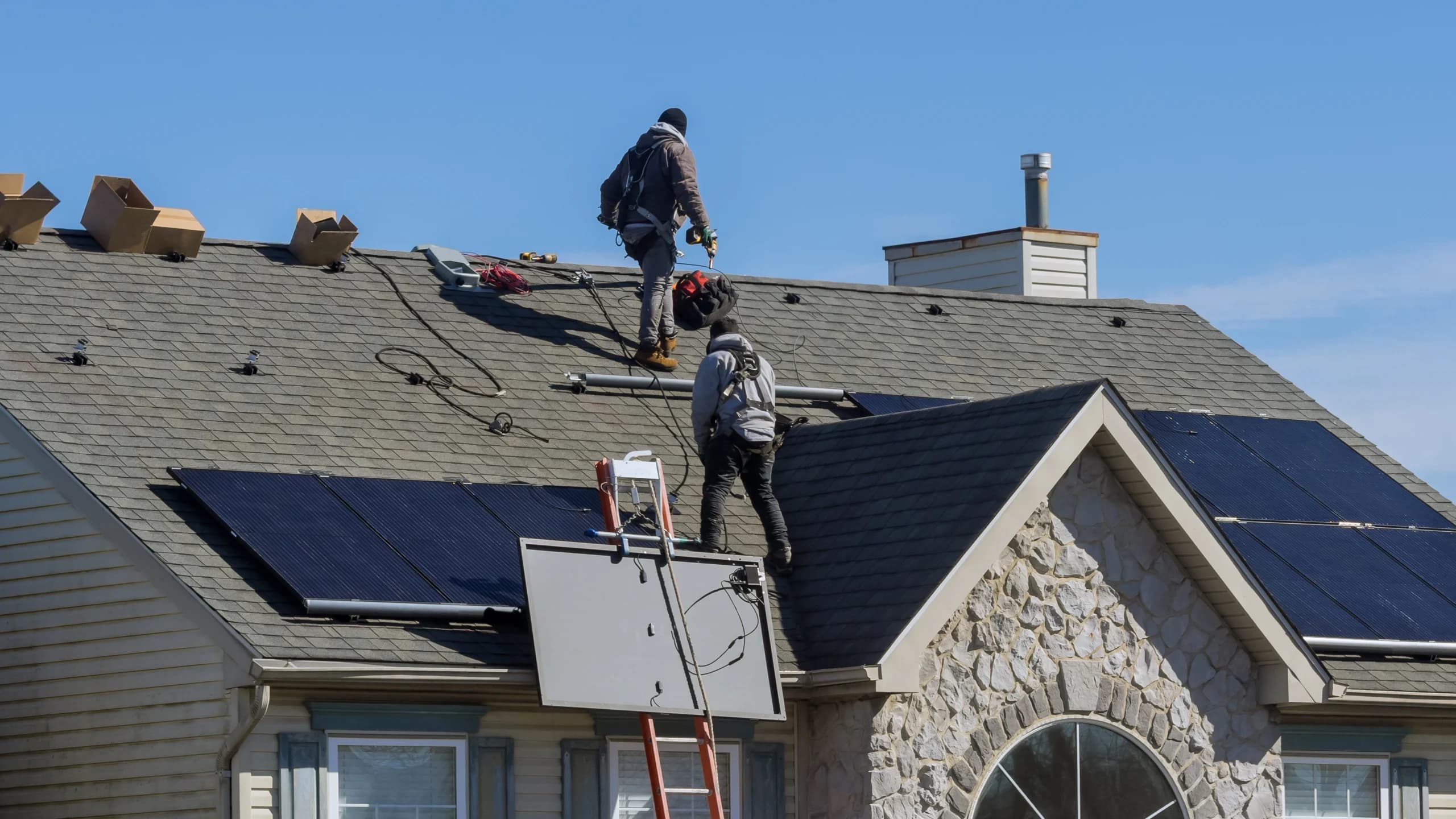
How heavy are solar panels?
Residential solar panels typically weigh about 40–50 pounds each, which makes weight an important part of planning a home solar installation. While most residential roofs can comfortably support this load, factors like roof age, material, structural condition, and local climate all influence whether your roof is ready for solar.
Understanding how much a solar system weighs — from individual panels to the full array and mounting equipment — can help you make a confident, informed decision before moving forward.
In this article, we’ll break down the weight of different panel types, how much mounting hardware adds, what contributes most to total system weight, and how to understand your roof’s load capacity. We’ll also explain how solar installers evaluate your roof accurately and ensure it’s prepared for a safe, successful installation.
In this article:
- How much do residential solar panels weigh?
- How much do commercial solar panels weigh?
- What makes solar panels heavy?
- How to know if your roof can support solar
- Putting solar panel weight into perspective
- Frequently asked questions
How much do residential solar panels weigh?
Most residential solar panels weigh between 40 and 50 pounds each, though the exact weight depends on the solar panel type, materials, and size.
The most common residential solar panels are 60-cell monocrystalline and polycrystalline modules, typically measuring 65 in. x 39 in. (5.4 ft. x 3.25 ft.) with a surface area of about 17.55 square feet. That works out to roughly 2.3–2.7 pounds per square foot, depending on construction.
Differences in weight result from the materials used, panel size, panel type, and other factors. Things like the glass panel that protects the solar cells, the metal frame, the solar cells themselves, and other parts of the panel can cause weight differences from panel to panel. Here are just a few examples:
| Residential Solar Panel Brand | Panel Weight |
| SunPower 390–420 W Residential A-Series Panels (Maxeon) | ~44 lbs (20 kg) |
| REC Alpha Pure-R / Pure-RX | ~45 lbs (20.5 kg) |
| Jinko Solar Tiger Neo (72-cell, 580-605 W) | ~60 lbs (27.0 kg) |
| Trina Solar Vertex S+ (425–450 W) | ~46 lbs (21.8 kg) |
How much do commercial solar panels weigh?
Commercial solar panels are generally 72 solar cells rather than 60 and can weigh 50 pounds or more. These panels are typically 78 in. x 39 in. (6.5 ft. x 3.25 ft.). Some commercial panels feature 96 cells, and are more like 62 in. x 41 in. (5.2 ft x 3.5 ft). These larger solar panels can weigh between 70 and 80 pounds.
What makes solar panels so heavy?
The majority of a solar panel’s weight comes from the tempered glass that protects the solar cells and the metal frame around it. In comparison, the solar cells themselves are fairly light.
Other things that add to the panels’ weight are other hardware, the system’s backsheet, which protects the back of the panel, and encapsulant, the protective layer that resides between the cell and the glass.

How to know if your roof can support solar
Estimating the weight of your solar panel system is the first step in determining whether your roof can support it. While most modern roofs are designed to handle the additional load from solar panels, factors like age, material, condition, and even your local climate can influence structural capacity. Accurate weight estimates also help with permitting and planning for any potential reinforcements.
How to calculate total solar system weight
Besides the solar panels themselves, you also have to consider the mounting system, which weighs between 3 and 6 pounds per square foot — or potentially more if you live in an area that commonly gets extreme weather like hurricanes. To understand the full weight of the system, you have to calculate the weight of all the panels and the mounting system.
(Panel weight x number of panels) + (weight of the mounting system per square foot x panel square footage) = total weight
For example, let’s look at a pretty typical 20-panel system. Assuming each solar panel weighs 40 pounds, the panels alone would weigh 800 pounds. Then there’s mounting hardware, which adds roughly 2–4 pounds per square foot, so we’ll use 3 pounds.
(40 x 20) + (3 x 300) = 1,700 pounds or 5.6 pounds per square foot
How to assess roof load capacity
Knowing your roof’s load capacity requires understanding two types of load: dead and live. Dead load refers to any permanent fixture affixed to the roof, such as shingles or a solar panel system. A live load is a temporary load, such as snow or a contractor performing roof work. The average residential roof has a dead load capacity of 10 to 15 pounds per square foot. If you have asphalt shingles, they are likely going to add more to your roof load than the sometimes lighter-weight metal tiles.
The average roof is likely to last between 20 and 50 years, depending on the roofing material used. Wear and tear can reduce the roof’s weight capacity, making it harder to install a solar panel system on older roofs. It is also important to note that heavy snowfall in your region adds to the temporary live weight load. Having a firm understanding of whether your roof can withstand the load of a solar panel system is why it is imperative to contact a professional solar installer to assess it.
Consult with a professional
A solar professional can help you with all these calculations and find the right fit for you. Be sure to find a trusted installer in your area and make them explain everything to you. These professionals can inspect your roof to determine if it is a good candidate for solar and make suggestions to avoid damage. They can also help you navigate your area’s building codes or national requirements, such as those from the National Fire Protection Association, walk you through necessary permits, and conduct inspections safely.
Putting solar panel weight into perspective
While most modern roofs can easily support solar at 40-to-50 pounds per panel, it’s crucial to understand the weight of a system on your home’s roof. Beyond the panels themselves, you must also consider the mounting structure. It’s a good idea to have a professional installer inspect your roof and assess its readiness before proceeding with an installation. Just remember, even with all weight accounted for, a solar panel system still only takes part of the typical roof’s load-bearing capability.
Frequently asked questions
Will solar panels damage my roof due to their weight?
No, if a solar panel system is professionally installed, it is unlikely to damage the roof. The racking system distributes the weight throughout the roof, which helps reduce the load in any one area. A modern roof can handle a load that’s higher per square foot than the typical system weighs. However, the best way to avoid damage is to have your roof assessed before installing a solar panel system. Professional installers can determine if the roof’s integrity can safely accommodate a system.
Can I install solar panels on a tile or metal roof?
Yes! You can absolutely install solar panels on a tile or metal roof. The biggest difference is the mounting system required to support the panels. Each of these roof varieties needs specialized systems, such as a drill-free clamp-based mounting system for metal standing seam roofs or an inset installation that installs the racking system beneath the roof tiles.
How do I calculate the total weight of my planned solar array?
To calculate the total weight of your solar array, you need both the combined weight of all the solar panels and the calculated weight of the mounting system.
(Panel weight x number of panels) + (weight of the mounting system per square foot x panel square footage) = total weight