How whole home electrification can save you money
Looking to save money? Electrifying your home is a great way to cut your utility bills — and more. Learn all the ins and outs here.
Table of Contents
- What is whole home electrification?
- The benefits of whole home electrification
- Electrification and efficiency solutions — appliances, HVAC, and more
- Federal policies that can help
- State incentives that can help
- The TL;DRs of whole home electrification
- Home electrification checklist
- The future of whole home systems
- Frequently asked questions (aka FAQs)
Let’s face it: In 2026, homeowners are looking to save money anywhere they can. The cost of living continues to rise — consumer prices are up more than 25% since the pandemic, according to a December 2025 analysis of the U.S. Bureau of Labor Statistics’ consumer price index.
The cost of energy also continues to rise. Fossil fuels and electricity alike have seen their prices increase significantly. And, of course, fossil fuels have the added cost of increased greenhouse gasses, spills, and other health effects.
It can be hard to know what to do. But one reliable way to save money is to run your home on electricity wherever possible. Switching out oil heat for heat pumps, your gas range and oven for an electric one, even your clothes dryer and hot water heater can make a difference.
When you add it all up, the savings can be significant.
In this guide, we’ll look at some key whole home electrification benefits, trends, myths, and policies to see how you can save money by electrifying your home. And be sure to check out the FAQ section at the end where we’ll answer some of your most common and pressing questions.
Want to get started right now? Here are some key sections to look at:
Home electrification checklist
TL;DRs of whole home electrification
Let’s answer the first question first…
What is whole home electrification?
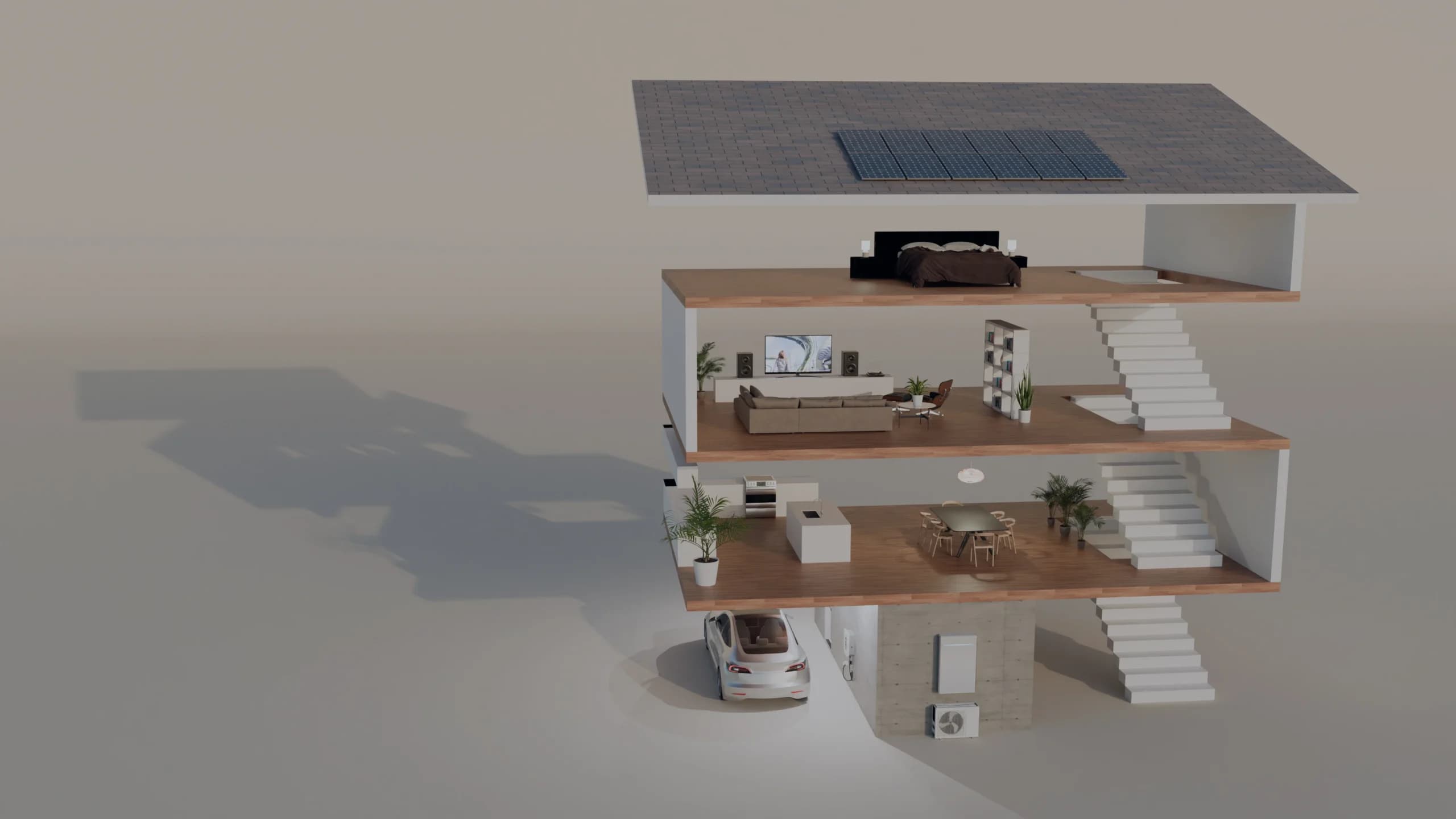
Whole home electrification refers to the process of switching your home’s equipment and appliances over from being powered by nonrenewable resources — like natural gas, oil, or wood — to instead being fully powered by electricity.
With electricity as your home’s sole energy source — especially when generated using renewable energy sources like solar — you can do more than just reduce emissions. Residential home electrification can actually save American households $96 billion in energy costs across 49 million U.S. homes.
But electrification is just one aspect of planning to run a home on electricity. You can also increase your energy efficiency and reduce your utility costs by doing things like insulating windows and swapping out existing lighting fixtures for more energy-efficient ones — and these are just the tip of the iceberg.
The benefits of whole home electrification
The benefits of transitioning to electricity to power your home range from lower bills to physical and home health improvements — all while making important contributions to the long-term health and safety of our environment.
Financial benefits
Since the start of 2020, electricity price hikes due to everything from the pandemic, to the Russia-Ukraine conflict, to the One Big Beautiful Bill Act (OBBBA) (we didn’t name it) have brought the world to the brink of an energy crisis. In fact, from the beginning of 2020 to 2024, the cost of electricity for the average U.S. home increased almost 30%.
But whole home electrification, paired with a solar-plus-storage system, can deliver real savings on your utility bill — now and in the future.
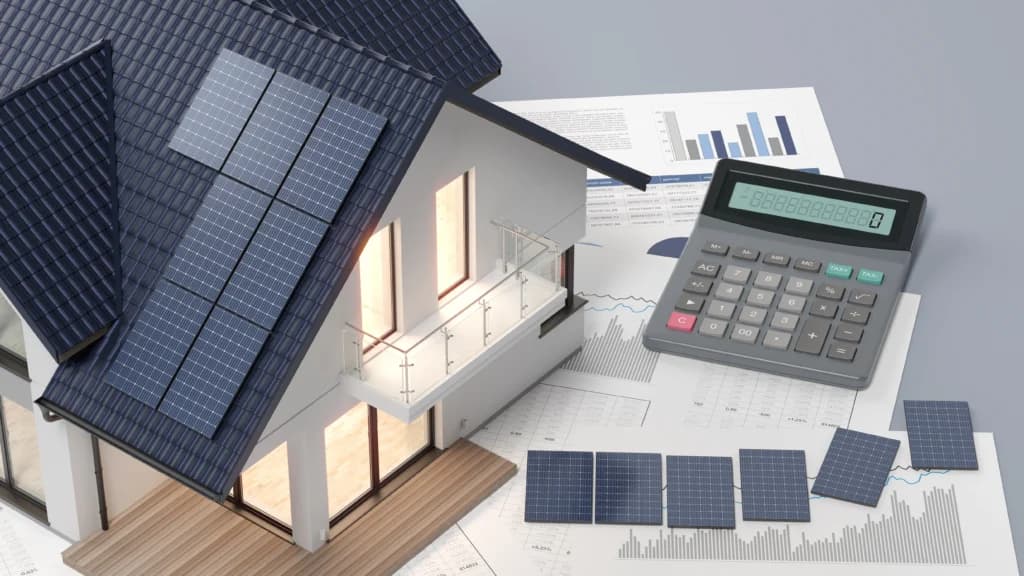
At face value, home electrification might seem expensive. But research shows that a newly constructed electrified home in the U.S. saves homeowners an average of $130 to $540 annually — plus, they avoid about $6,000 for gas line connections.
The benefits aren’t exclusive to new construction, of course. Retrofitting existing homes with electric appliances like heat pumps, heat pump hot water heaters, and other improvements can lower your bills significantly. For example, switching to a heat pump water heater saves the average homeowner about $330 per year, while an all-electric HVAC system can reduce energy costs by about $1,000 per year.
Energy independence
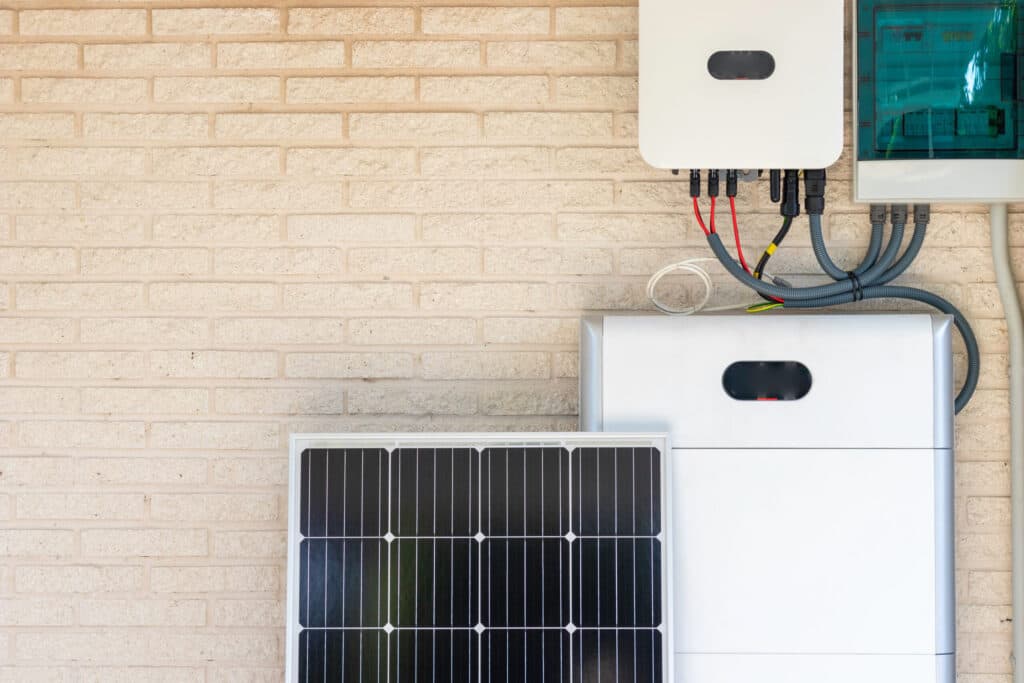
One thing about electricity is you can generate it yourself. When you combine electrification with a solar system, including solar panels, and a storage solution like a lithium-ion battery, you can save even more. On top of that, when you go all electric with solar and battery storage you dramatically reduce your dependence on the utility company — and the power outages, pipeline failures, and rising prices that come with it.
Health benefits
That’s right, going electric can actually make your home healthier. By going electric, you can eliminate hazards like in-home gas leaks and the potential for exposure to harmful natural gasses and propane traditionally used to power homes. This can greatly reduce indoor pollutants like carbon monoxide, nitrogen dioxide, and a whole host of particulates, improving the air quality inside your home and reducing the risk of exposing your family to serious health issues like cancer, heart disease, and asthma.
Did you know? Homes that use gas stoves can have up to 400% higher nitrogen dioxide levels than those with electric stoves, increasing risk of lung irritation, asthma, and other respiratory ailments.
But electrified homes can do more than just improve air quality. With electric heat pumps and hybrid systems, you can get more consistent in-home temperatures, just making you more comfortable day-to-day. Can you really put a price on that?
Home health benefits
You likely spent a lot on your home — it’s natural to want to protect it. But traditional power options like gas and oil can expose your house to a host of materials that can rot walls, soak ceilings, contaminate lawns and water supplies, and more, including:
- Petroleum hydrocarbons
- Metals
- Naturally occurring radioactive materials
- Salts
- Toxic chemicals
Whole home electrification helps greatly reduce these contaminants, while also significantly cutting noise pollution from oil and gas furnaces. Who among us hasn’t been startled when that beast in the basement fires up?
Environmental benefits
Did you know? According to the Natural Resources Defense Council, replacing natural gas with clean electricity will reduce greenhouse gas emissions from California’s single-family homes by up to 90% within the next three decades.
Whole home electrification massively reduces the carbon emissions from homes. In fact, by simply replacing a gas-fired furnace with an all-electric heat pump, the typical U.S. home can cut its heating-related climate pollution by 45% to 72%.
In the next section, we’ll look at some specific electric appliances, their potential benefits, and what you need to know.
Becoming future proof
Because cities and towns are catching on to the benefits of electrification, new building codes often have electrification and renewable energy requirements built in. For example, they may mandate electric appliances. Electrifying your home now could mean less work later, and make your home more attractive when it’s time to sell.
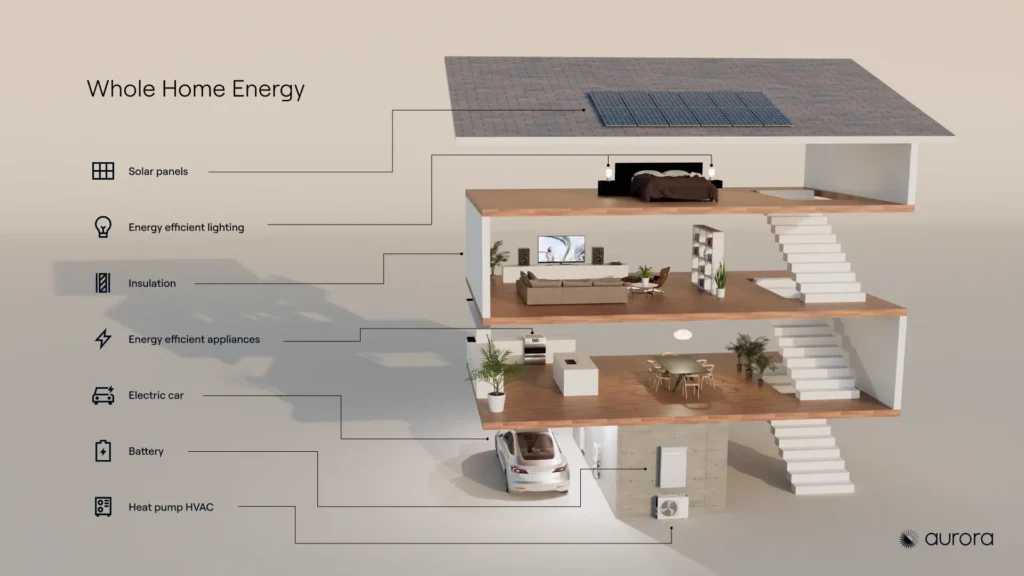
Types of electrification and efficiency solutions
A house isn’t just a house. It’s a place you return to for rest and relaxation, and to make meaningful memories with family and friends. So, it’s understandable if you’re hesitant to install an unfamiliar appliance or technology in your home.
Let’s dig into some of the most common technologies to allay those fears a bit.
Heat pumps (i.e. Heating and cooling / HVAC)
You can think of heat pumps as reversible air conditioners. You know how a window air conditioning unit cools the inside while blowing hot air outside? That’s the basic premise of a heat pump. In hot weather, they work just like a traditional air conditioner to cool the home; in cold weather, they reverse and the warm air is pushed in through the home’s vents. (If you’re outside near a heat pump in the winter, you can feel the cold air it’s generating.)
If you’re currently using propane, oil, or “regular” electric heating systems, you could save more than $1,000 on your yearly heating bill by switching to a heat pump. What’s more, the carbon emissions produced by the electric grid are expected to fall as clean energy resources grow, making heat pumps a smarter climate choice than gas-fired furnaces.
Heat pump hot water heaters
Like regular heat pumps, heat pump hot water heaters use electricity to move heat from one location to another, so they work well in a whole home system. The key difference is that, as the name implies, heat pump water heaters are explicitly used to heat water, rather than for other purposes like home heating.
Did you know: Heat pump hot water heaters are three to four times more energy-efficient than traditional water heaters!
Stove, oven, cooktop + clothes dryers
Appliances like stoves and clothes dryers can make up a significant chunk of your monthly utility costs.
By choosing efficient electric appliances over their fossil fuel-powered counterparts, you can save serious money. So go ahead and clean and dry last night’s gym clothes, and heat up leftovers while you wait, they won’t add much to your next utility bill.
Curious about how much electricity common appliances use? You’re in the right place:
How many watts does a space heater use?
How many watts does an air conditioner use?
How many watts does a fridge use?
How many watts does it take to run a house?
Electric vehicles
The electric vehicle (EV) revolution is here to stay: According to Experian, at the end of 2024, there were about 4.1 million electric cars on U.S. roads, an increase of more than 2.7 million since 2021. And by 2030? That number could be more than 40 million.
But what do EVs have to do with whole home electrification?
More than you might think: If you’re considering solar to lower electric bills, adding system capacity to account for an EV can result in even greater bill savings. So if you’re considering an EV, make sure you let your installer know.
Smart thermostats
Smart thermostats are a lot like regular thermostats, except they can change the temperature for you. Specifically, they automatically adjust heating and cooling settings based on exterior temperature and your temperature preferences, giving you a more constant feeling of comfort without having to manually adjust the thermostat.
Even better, smart thermostats can optimize for energy use, maintaining your preferred temperatures while helping to minimize how much energy you use. And since many smart thermostats connect to your network, you can monitor and change the temperature from your phone and even track your energy use over time.
Main panel upgrades (MPUs) and SMART electrical panels
Main panel upgrades are often required when electrifying older homes that were built with smaller panels (typically <125 amps). While new solar installations are often a key driver, new technology — called SMART electrical panels — is getting more popular.
SMART electrical panels can be connected to your Wi-Fi, and can control electrical systems, prevent electrical fires, help you track and control your energy use, and even optimize energy storage if you have a battery. When paired with solar batteries, SMART panels can help you further reduce the electricity you use from the grid, and make it easier to adjust any energy use restriction rules.
Insulation
It may seem decidedly low tech for a guide about electrification, but insulation — including styrofoam panels and fiberglass rolls — is one of the most important energy efficiency upgrades you can make. It helps keep heat out in the summer, and in in the winter. When a house is properly insulated, you use less energy to keep your home warm and cool, leading to lower utility bills.
LED lighting
LED lighting is becoming increasingly common in the U.S. It lasts up to 25 times longer than incandescent lighting, and also uses 90% less energy, making it the go-to solution for cutting costs and emissions. Again, maybe not the most exciting upgrade you can make, but definitely one that makes a difference. And with many LED lighting systems offering multiple colors and easy control via your phone, you can start a dance party at the press of a button.
Did you know: By 2035, the majority of U.S. lighting installations will use LED technology, and energy savings could top 569 terawatt hours annually.
Now that we’ve looked inside your home, let’s take a quick look at the policies that might affect your whole home electrification projects.

Federal policies that can help
Even with the OBBBA taking hold (again, we didn’t name it), there are still many federal and state policies that support whole home electrification. Whether they offer financial incentives for electrifying your home or help state governments to meet emissions and efficiency goals, knowing these policies can save you some serious cash (and, you know, help the Earth).
How to claim some of these rebates and incentives can be confusing. Did you know that many direct rebates for things like heat pump hot water heaters are given to you right at the register — you get the rebate at the time you buy the appliance. For other incentives, you might need to submit a receipt to the utility company or a government agency. Tax incentives, of course, are usually claimed on your IRS or state tax forms when you do your taxes. Whatever the process, it’s probably easier than you think, and a little research can go a long way.
Inflation Reduction Act
The Inflation Reduction Act of 2022 was perhaps the most important, comprehensive, consumer-friendly renewable energy legislation in U.S. history. It incentivized clean energy, renewables, and development of electricity transmission infrastructure — along with creating thousands of new jobs.
Unfortunately, the OBBBA cut most of these incentives. SEIA estimated that the bill could cost the U.S. 330,000 jobs and “erase $286 billion in local investment in American communities.” And that’s on top of making solar, storage, other electrification improvements, and electricity itself more expensive for everyday homeowners.
Electrification incentives and rebates
However, as we’ve said, electrifying your home — especially when combined with solar and battery storage — will still likely save you money. And thanks to forward thinking states and negotiation of the OBBBA terms, there are still incentives for people looking to go solar or electrify their home.
Let’s look at just a few.
- There are still tax deductions for upgrades like batteries and more depending on financing and other factors. Check with your contractor or installer to get more details
- Direct rebates to offset upfront costs of technologies like heat pumps, heat pump water heaters, and rooftop solar panels
- Home electrification and appliance rebates to help electrify low- to moderate-income households
- Long-term, uncapped renewable energy tax credits and a federal tax credit for used EVs
State incentives for whole home electrification
At the state level, there are even more incentives, depending on where you live. We’ll highlight three states here — New York, California, and Massachusetts. If you don’t live in any of these states, you can skip to the next section.
Climate Leadership and Community Protection Act (NY)
New York’s Climate Leadership and Community Protection Act (CLCPA) requires the state to combat climate change by hitting net-zero emissions by 2050.
This legislation is broken up into a few smaller milestones:
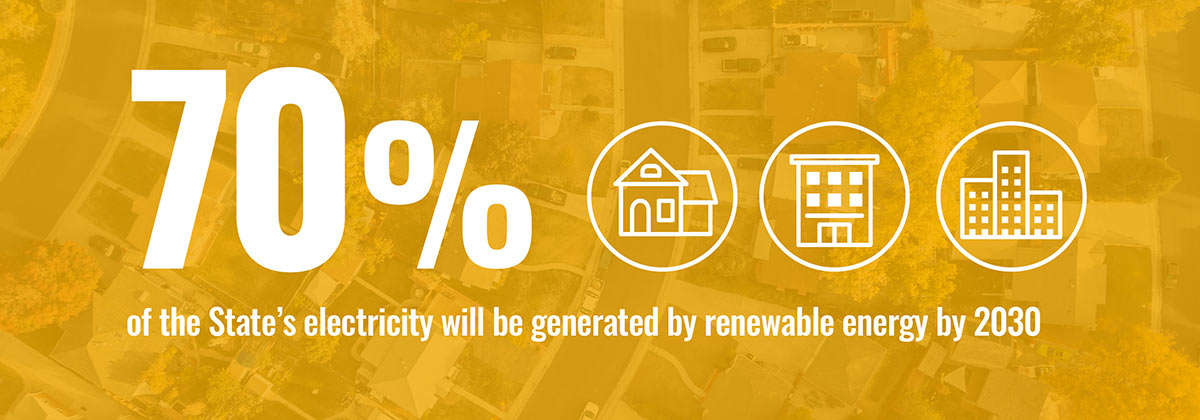
- By 2030, New York will reduce emissions to 40% below their levels in 1990. When that happens, 70% of the state’s electricity is expected to be generated by renewable energy.
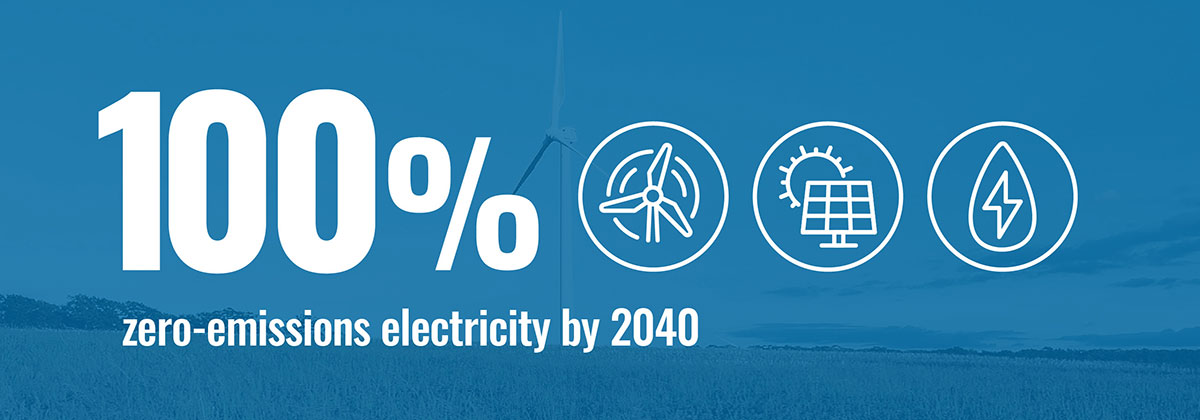
- By 2040, New York has the goal to have 100% zero-emissions electricity — that’s right, all generated by renewable energy.
- By 2050, if all goes to plan, emissions will be 85% below 1990 levels. The remaining 15% will be offset to reach net-zero emissions by taking climate-friendly actions like planting additional trees to pull carbon-dioxide from the air.
Clean Energy Climate Plan (MA)
Massachusetts’ Clean Energy Climate Plan (CECP) says that by 2050, the Bay State will achieve net-zero greenhouse gas emissions.
Just like New York’s CLCPA, the CECP is broken up into smaller chunks:
- The 2025 plan aims for a 33% emissions reduction from 1990 levels.
- The 2030 plan aims to reduce emissions to 50% of 1990 levels.
- The 2050 plan highlights goals, strategies, policies, and actions that will reduce statewide greenhouse gas emissions to at least 85% below the 1990 baseline level.
California incentive programs
California has over 39 million residents. That’s a lot of people — and a lot of emissions. Let’s look at three key pieces of legislation California passed to help homeowners electrify their homes in more cost-effective ways, and reduce emissions as a result.
California Advanced Homes Program
The California Advanced Homes Program (CAHP) encourages builders to construct all-electric homes under California’s 2019 Energy Code, which aims to improve the energy efficiency of new and existing buildings and additions by using energy-efficient technologies and construction practices.
Low-Income Weatherization Program
The Low-Income Weatherization Program (LIWP) provides free solar systems and energy efficiency upgrades to low-income households. This program helps lower household energy costs for those in need by offering them ways to generate, use, and save clean, renewable energy more efficiently.
Self-Generation Incentive Program
The Self-Generation Incentive Program (SGIP) offers rebates to homeowners (and other owners of larger properties) to help them install distributed energy resources on their side of the utility meter. Qualifying technologies include:
- Wind turbines
- Waste heat to power technologies
- Pressure reduction turbines
- Internal combustion engines
- Microturbines
- Gas turbines
- Fuel cells
- Advanced energy storage systems
Other state policies
These are just a few examples. To get more information about the policies and regulations in your state, the N.C. Clean Energy Technology Center’s Database of State Incentives for Renewables & Efficiency (DSIRE) is an easy-to-use reference.
The TL;DRs of whole home electrification
OK, there’s been a lot of details here. In these last few sections let’s wrap things up with some pros and cons potential drawbacks, a little myth busting, and a checklist you can use when you start your electrification journey.
Pros
It heats and cools: A heat pump not only replaces your furnace or boiler, it also becomes your central air conditioner. This means one maintenance contact, one service call. If you have a smaller home, it can also free up significant space. Look at the footprint of your existing furnace and picture that as storage!
Health and emissions: As we now know, heat pumps run on electricity, so there’s no burning of anything. Furnaces and boilers have to vent their emissions outside of your home, creating a potential health hazard. Then there’s the greater emissions, if you run your heat pump on clean electricity (i.e. solar, or from the utility’s clean energy option) you significantly reduce your environmental footprint.
Long-term cost: There’s no arguing that both electricity and fossil fuels have risen in price recently, and will likely continue to do so. By electrifying your home, though, you have more control of the input. With solar and battery storage, it’s possible to generate a lot of your own electricity for free.
Potential drawbacks
Upfront cost: There’s no denying things like heat pumps and stoves can be expensive. That’s why it’s important to prioritize — you can start with something as simple as LED light bulbs. It’s also important to investigate incentives, there are now rebates and zero-interest loans available for many home electric appliances.
Panel upgrade: If you have to upgrade your electrical it’s going to be a pretty large expense. Again, here it’s important to prioritize. If a panel upgrade isn’t in your price range now, you can still get started with smaller items and energy efficiency improvements.
Grid instability: With more extreme weather, aging grid infrastructure, and other factors, power outages seem to be getting more and more frequent. So, if you electrify more, you may be in worse shape when the power goes out. Of course, you can turn this drawback on its head with solar plus storage. By storing excess solar energy in a battery for when you need it, you can keep the lights on during those outages.
Myths… busted
There are a few persistent myths about home electrification that seem to persist despite evidence and technology improvements. Let’s look at a few.
“Heat pumps don’t work in cold climates”
In the early days of heat pumps, this might have been true. When it got really cold they struggled to create enough of a temperature difference between the inside and outside. For example, if an old heat pump could consistently keep a 50 degree difference, that’s fine most of the time, right?
But, when it got below 15 degrees or so outside, it became a problem. Now, heat pumps can keep a temperature difference of 65 degrees or more, making this a non-issue for the vast majority of households. And you can always supplement with space heaters for those -10 degree nights.
“Gas is always cheaper”
I mean, at this point we know this isn’t true, right? The price of fossil gas is volatile and rising — just like most energy sources these days. Electricity has the benefit that we can add more generation sources to the grid, those sources can be renewable and clean, and we can generate it close to where we use it (even on your own roof!). This will never be true for gas or oil.
“You must electrify everything at once”
This is just clearly false. You can electrify at whatever pace suits you best. Start small with an electric range, or go all in with a heat pump. Whatever works best for you. Speaking of…
Home electrification checklist
There is no “wrong” way to get started with your home electrification journey. Maybe you want to prioritize the quickest, easiest (cheapest) things first, then go up from there. Maybe you want to get the biggest savings first and jump right in. Whatever order you choose for your actual projects, there are a few things you can do to make sure you get everything you can out of your whole home electrification.
_ Get a home energy assessment
Provided for free in most areas, a home energy assessment will help you get started on the right foot. The assessor will look at many things in your home, including:
- Electrical infrastructure (your wiring and other things)
- Exterior wall insulation
- Attic and basement insulation
- Kitchen and bathroom insulation & air-sealing
- Air flow between living spaces
- Drafts from windows and doors
- Light bulb power use and efficiency
- Electric meter readings
- Hot water heater efficiency
- Total home energy efficiency
This will give you a great idea of the projects that will save you the most money, quickest. They will even find resources for low- or no-interest loans and other incentives to help.
_ Evaluate your main electrical panel
An electrician or even the home assessment company can evaluate your electrical panel and make sure it’s ready for any upgrades you want to do. For those in newer homes, your current panel is likely fine. For those in older homes, you may need to replace it, depending on the upgrades you’re considering. Either way, upgrading your panel can be an investment that pays off as you electrify.
_ Consider priority upgrades
Depending on your budget, you may want to prioritize the upgrades that save you the most — heat pumps, heat pump hot water heaters, stoves. While these items can be costly up front, they can also pay for themselves fairly quickly, and the savings adds up.
_ Inventory your appliances
Take an inventory of all your appliances and how old they are. It makes the most sense to replace older items that are closer to their end dates first, then work your way towards newer items. Replacing appliances when they fail is a great way to go electric without adding additional costs.
_ Research all the incentives
Your home energy assessor will know all the incentives in your area, but it’s also likely that your state or utility company has information on incentives and rebates. Check before you buy anything — whether it’s a light bulb or a hot water heater — you might be surprised by the savings.
_ Make a budget
Be realistic with yourself. What can you afford now, what might you be able to afford down the road? And remember to include incentives in your calculations, they can knock down prices considerably, making something that was out of budget more realistic.
_ Consider solar
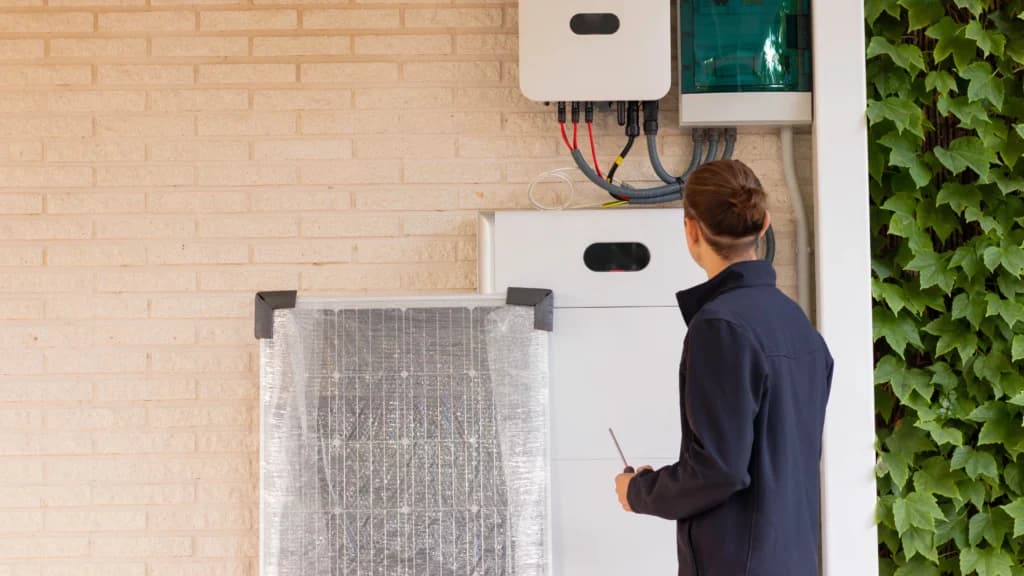
Yes, we may be biased, but this is a great time to consider solar. Depending on your home’s sun exposure and other factors, you may be able to generate a significant percentage of your electricity needs right from your own roof.
When you consult an installer, make sure to fill them in on all the electrical improvements you’re considering — EV, heat pump, appliances, etc. This way they can size the system correctly and make sure you save as much as possible.
The future of whole home systems
Gas and fossil fuel prices are on the rise — and so are temperatures. We need a way to both keep costs down and maybe even make a positive impact on the world around us.
Thanks to all-electric homes becoming cheaper to build, as well as growth in the U.S.’s renewable energy capacity, whole home electrification has proven to be a cost-friendly, efficient energy solution for homeowners across the country. And many homeowners already agree: Roughly 16.8 million U.S. homes are projected to be powered by residential solar systems by 2032. That’s roughly 18% of single unit homes, up from 5% in 2023.
But if you’re still on the fence, hopefully this guide showed a little bit about how embracing whole home electrification can deliver significant long-term savings, even as overall electricity rates continue to increase. (Spoiler alert, fossil fuel costs are also rising, faster, and are more volatile.) Plus, pairing electrification with a home solar system can really pump up your savings.
FAQ
Q: Is whole home electrification worth it?
Whole home electrification has many benefits, from lowering costs to helping the environment. Simply by replacing a gas-fired furnace with a heat pump can reduce your climate pollution by 45%-72%. This reduction only increases with additional appliances.
On the cost side, it really adds up. Going with all-electric HVAC can save a household more than $1,000 per year. A heat pump hot water heater? Over $300 per year.
And that’s before considering a solar system. Solar can add to the savings by generating free — or significantly lower cost — electricity, meaning you buy less from the utility company.
So, whether you’re interested in saving money or helping the planet — or a combination of both — electrifying your home is a great place to start.
Q: Is electrification cheaper than gas?
The short answer is: Yes. And it’s important to remember that all the numbers here are at current prices. While both gas and electricity prices fluctuate (i.e. get more expensive) there is something you can do to decrease your electricity costs: Install solar.
Making solar part of your home electrification projects can increase your savings significantly. Producing your own electricity reduces the amount you need to buy from the grid. We don’t know of any way to do that with natural gas or oil short of installing a rig in your backyard.
Q: How do I electrify my home?
You’ve come to the right place. Start with this checklist, and go from there. A great first step is to get a home energy assessment, which most people can get for free through their utility or an affiliated company. You can also do them yourself!
Q: Do I need to upgrade my electrical panel?
Not necessarily, but you might. Newer homes are likely already prepared for as much electrification as you do, but older homes may need an upgrade. You can find more information here.
Q: Can I electrify my home in phases?
Of course! Home electrification isn’t one big project, it’s really a bunch of smaller projects. Go at your own pace, prioritize how you see fit (oldest appliances first, biggest savings first), and get started! You can get your electrification journey going by replacing one incandescent light bulb with an LED, or you can jump in and get a heat pump. Whatever works best for you. See our checklist here for more steps.
Q: What’s the first thing to electrify?
Again, this really depends on your preferences and budget. A couple popular ways to get started are:
- Prioritize older appliances, replacing them with electric ones as they reach their end date.
- Prioritize savings, replacing the biggest items first to get the most bang for your buck.
See our checklist for more info.
Q: How long does whole-home electrification take?
It can be as quick or as slow as you like. A heat pump project may take a week, a heat pump hot water heater can take a day, changing out a stove can take a couple hours.
Additional resources
Get a detailed breakdown of whole home electrification costs for different states and technologies.
Use the N.C. Clean Energy Technology Center‘s Database of State Incentives for Renewables & Efficiency (DSIRE) to look up policies and incentives by zip code.
Visit Rewiring America to learn even more about the whole home electrification revolution.