
HEEHRA explained: The federal home energy rebate that still exists in 2026
While several federal energy incentives expired at the end of 2025, HEEHRA — the High-Efficiency Electric Home Rebate Act — survived and is still paying income-qualified homeowners up to $14,000 toward heat pumps, appliances, panel upgrades, and more. Here’s what it covers, who qualifies, and how to claim it.
A lot changed at the end of 2025 when it comes to federal energy incentives. The residential solar tax credit (25D) expired. The energy efficiency home improvement credit (25C) expired with it. For many homeowners, the question is: Is there anything left?
The answer is yes. And as a bonus, it doesn’t require filing anything on your taxes.
HEEHRA (the High-Efficiency Electric Home Rebate Act, also called HEAR) is a federal rebate program funded by the Inflation Reduction Act that provides point-of-sale discounts on heat pumps, water heaters, electrical panel upgrades, and other home electrification upgrades. The discount comes off your purchase at the time of installation. No tax filing. No waiting until April. And it was specifically designed for households that might not benefit from tax credits because of lower tax liability.
As of mid-2026, more than 20 states have active programs, and few homeowners know it exists.
In this article:
- What is HEEHRA / HEAR?
- What’s the difference between HEEHRA, a tax credit, and HOMES?
- What does HEEHRA cover?
- Who qualifies?
- Which states have active programs?
- How do you claim it?
- Does HEEHRA connect to solar?
- Frequently asked questions
What is HEEHRA / HEAR?
The High-Efficiency Electric Home Rebate Act is a federal rebate program created under the Inflation Reduction Act of 2022. Congress appropriated $4.5 billion for it nationally.
Unlike a tax credit, HEEHRA is a point-of-sale rebate: The discount is applied directly to your purchase price at the time of installation, through a participating contractor. You don’t file for it on your taxes. You see it immediately in the form of a lower invoice.
The program is administered at the state level — the federal government grants funds to state energy offices, which then run their own programs and certified contractor networks. That’s why availability varies by state and why some states have already exhausted their initial funding (California, for instance, launched and ran out within weeks in early 2026).
The program is targeted at low-to-moderate income households: families earning up to 150% of their area median income (AMI). Higher earners do not qualify.
Looking to see how electric upgrades and solar could work for you? Get an estimate without giving your contact info.
What’s the difference between HEEHRA, a tax credit, and HOMES?
All these acronyms can get confusing, so…
HEEHRA / HEAR (this post): A federal rebate program for income-qualified households. Applied as a point-of-sale discount. No tax filing required. Available through state programs funded by the IRA. Still active in 2026.
25C Energy Efficient Home Improvement Credit: A tax credit for home energy improvements (heat pumps, insulation, windows, etc.) that any taxpayer could claim, regardless of income. This credit expired at the end of 2025 and is no longer available for equipment installed in 2026 and beyond.
25D Residential Solar Credit: The 30% tax credit for homeowners who purchased solar with cash or a loan. Also expired at the end of 2025. (Solar via third-party ownership — leases and power-purchase agreements — still benefits from the 48E commercial credit, which is a separate program.)
HOMES (Home Owner Managing Energy Savings): A companion IRA rebate program, also federally funded and state-administered, that is open to all homeowners regardless of income. HOMES rebates are based on demonstrated whole-home energy savings — the more energy you save, the larger the rebate. Not the same as HEEHRA, though some states offer both.
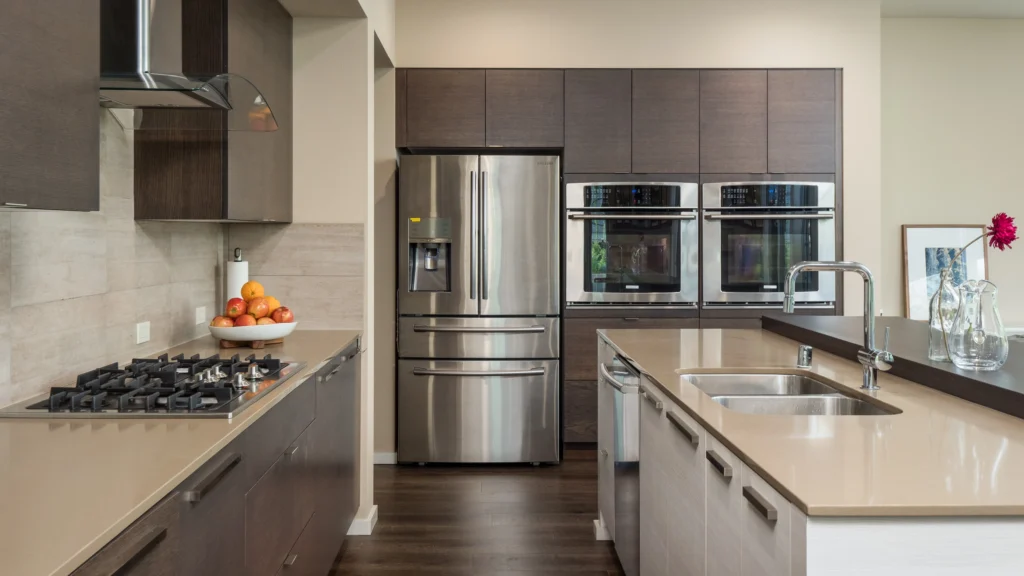
What does HEEHRA cover?
HEEHRA covers a range of home electrification upgrades. The maximum rebate amounts are set federally, though states may offer less based on their available funding:
| Upgrade | Low income (≤80% AMI) | Moderate income (80–150% AMI) |
| Heat pump (space heating/cooling) | Up to $8,000 | Up to $4,000 |
| Heat pump water heater | Up to $1,750 | Up to $1,750 |
| Electric cooking appliance | Up to $840 | Up to $840 |
| Heat pump clothes dryer | Up to $840 | Up to $840 |
| Electrical panel upgrade | Up to $4,000 | Up to $4,000 |
| Insulation, air sealing, ventilation | Up to $1,600 | Up to $1,600 |
| Electric wiring | Up to $2,500 | Up to $2,500 |
| Maximum total | $14,000 | $7,000 |
A few things to know about these amounts:
- These are the federal maximums. What your state program actually offers may be lower depending on available funding.
- Individual rebate amounts are also capped at a percentage of the project cost — typically 100% for low-income households and 50% for moderate-income households.
- Rebates cannot exceed your actual project cost, and you generally cannot combine HEEHRA with other rebates in a way that results in a net profit.
- Beginning in 2026, eligible heat pump systems must use refrigerants with a global warming potential (GWP) of 700 or lower — ask your contractor to confirm the equipment they’re proposing meets this requirement.
Who qualifies?
HEEHRA is income-qualified. Your household income relative to your area’s median income (AMI) determines your eligibility and rebate tier.
| Household income | Eligibility | Maximum rebate |
| At or below 80% AMI | Low-income tier | Up to $14,000 |
| 80% to 150% AMI | Moderate-income tier | Up to $7,000 |
| Above 150% AMI | Not eligible | — |
AMI varies by county and metro area — a household income that qualifies in San Francisco may not qualify in rural Ohio. Your state’s program will have an income calculator or eligibility tool to check your specific situation.
A few additional eligibility notes:
- The home must be your primary residence in most state programs
- Renters may be eligible in some states if their landlord participates, though this varies significantly
- You typically need to use a contractor certified or approved by your state’s program — the rebate flows through them, not directly to you
Which states have active programs?
As of mid-2026, more than 20 states have launched active HEEHRA programs. The rollout has been uneven — each state had to apply for DOE funding, build a program, recruit contractors, and launch independently.
States with active programs include: Massachusetts, New York, Washington, Virginia, Michigan, Indiana, Colorado, Rhode Island, and others.
States with programs launching in 2026: Oregon, Connecticut, Illinois, New Jersey, and others are in various stages of launch or pending DOE approval.
States that have not yet launched: Texas and Florida, among others, had not launched state-run programs as of early 2026.
California note: California launched one of the first and largest HEEHRA programs — and exhausted its entire initial funding allocation for single-family homes by February 24, 2026, less than three months after fully launching. Waitlists are in place; it’s worth monitoring for additional funding.
The fastest way to check your state’s current status is through the DOE’s rebates page or by searching “[your state] HEEHRA rebates 2026.” Program status can change as new funding is allocated or states finalize their applications.
How do you claim it?
The process is different from a tax credit — you don’t claim it on your return. Here’s how it works in most states:
- Check your state’s program to confirm it’s active and that you’re within the income limits
- Find a participating contractor — HEEHRA rebates are only available through contractors who are certified or approved in your state’s program. Not every HVAC contractor will be enrolled
- Get a project quote and confirm the equipment qualifies under the program’s requirements (efficiency standards, refrigerant type, etc.)
- Reserve the rebate funds before installation begins — most programs require pre-approval. This protects the funds for your project and is often required before work starts
- Complete the installation with your certified contractor
- Receive the rebate as either an instant discount on your invoice or a reimbursement after the rebate is processed — the timing and method depend on your state’s program
The key takeaway is that the rebate flows through the contractor, not directly to you. The contractor handles the reservation and paperwork, and you see the benefit as a lower total cost. This is why it’s important to find a contractor who is actually enrolled in the program — not every contractor who installs heat pumps will be set up to deliver HEEHRA rebates.
Does HEEHRA connect to solar?
HEEHRA can help if you’re looking to go solar in one major way: the electrical panel upgrade rebate (up to $4,000). Adding solar to a home can require an electrical panel upgrade if the existing panel is too small to handle the additional load. For income-qualified homeowners, HEEHRA can help offset that cost — which can otherwise run $1,500–$4,000.
More broadly, HEEHRA is part of a package of home electrification incentives that work well alongside solar. A home with a heat pump, an efficient water heater, and a solar system is more energy-independent than one with just panels — the solar system is producing clean electricity, and the home’s appliances are positioned to use it efficiently rather than burning gas or heating oil.
So, if you’re considering solar but also want to upgrade your heating or cooling system, doing both in the same period (and potentially the same installation) can make contractor coordination easier and may simplify the panel upgrade question.
The bottom line
HEEHRA is one of the most valuable home energy incentives available in 2026 — and one of the least known. For income-qualified homeowners in states with active programs, it can put thousands of dollars back into a home upgrade that would have cost significantly more without it. And because it comes off your invoice at purchase, there’s no tax complexity involved.
The catch is the state-by-state patchwork: not every state has a program, some have already run out of funding, and you need to use a certified contractor. But for households that qualify, it’s worth checking before any home electrification project.
Thinking about solar, a heat pump, or both? See what’s available in your area, all in one place.
Frequently asked questions
Q: What is HEEHRA?
HEEHRA (High-Efficiency Electric Home Rebate Act), also called HEAR, is a federal rebate program funded by the Inflation Reduction Act of 2022. It provides point-of-sale discounts — not tax credits — on heat pumps, heat pump water heaters, electrical panels, insulation, and other home electrification upgrades. It’s available only to income-qualified households (earning up to 150% of area median income) through state programs.
Q: Is HEEHRA still available in 2026?
Yes — HEEHRA survived the legislative changes that ended the 25D solar credit and the 25C energy efficiency tax credit at the end of 2025. As of mid-2026, roughly 23 states have active programs. Availability varies by state, and some states (like California) have already exhausted initial funding.
Q: How is HEEHRA different from a tax credit?
A tax credit reduces what you owe the IRS when you file your return — if you don’t owe enough in taxes, you may not get the full benefit. HEEHRA is a point-of-sale rebate: the discount is applied directly to your purchase price at installation, through a participating contractor. No tax filing required. This makes it particularly valuable for lower-income households who might have little or no tax liability.
Q: How much can I get from HEEHRA?
The federal maximums are up to $14,000 total for households at or below 80% of area median income, and up to $7,000 for households between 80% and 150% AMI. The heat pump rebate alone can be up to $8,000 (low income) or $4,000 (moderate income). Your state program may offer less depending on available funding.
Q: How do I find a HEEHRA-certified contractor?
Check your state’s energy office website or the DOE’s home energy rebates page for a list of approved contractors in your area. Not every HVAC contractor is enrolled — you need to use one that’s certified in your state’s program for the rebate to apply.
Q: Does HEEHRA cover solar panels?
Not directly. HEEHRA covers heat pumps, water heaters, cooking appliances, dryers, electrical panels, insulation, and wiring — not solar panels themselves. However, the electrical panel upgrade rebate (up to $4,000) can help offset a panel upgrade that’s often required when adding solar to an older home.