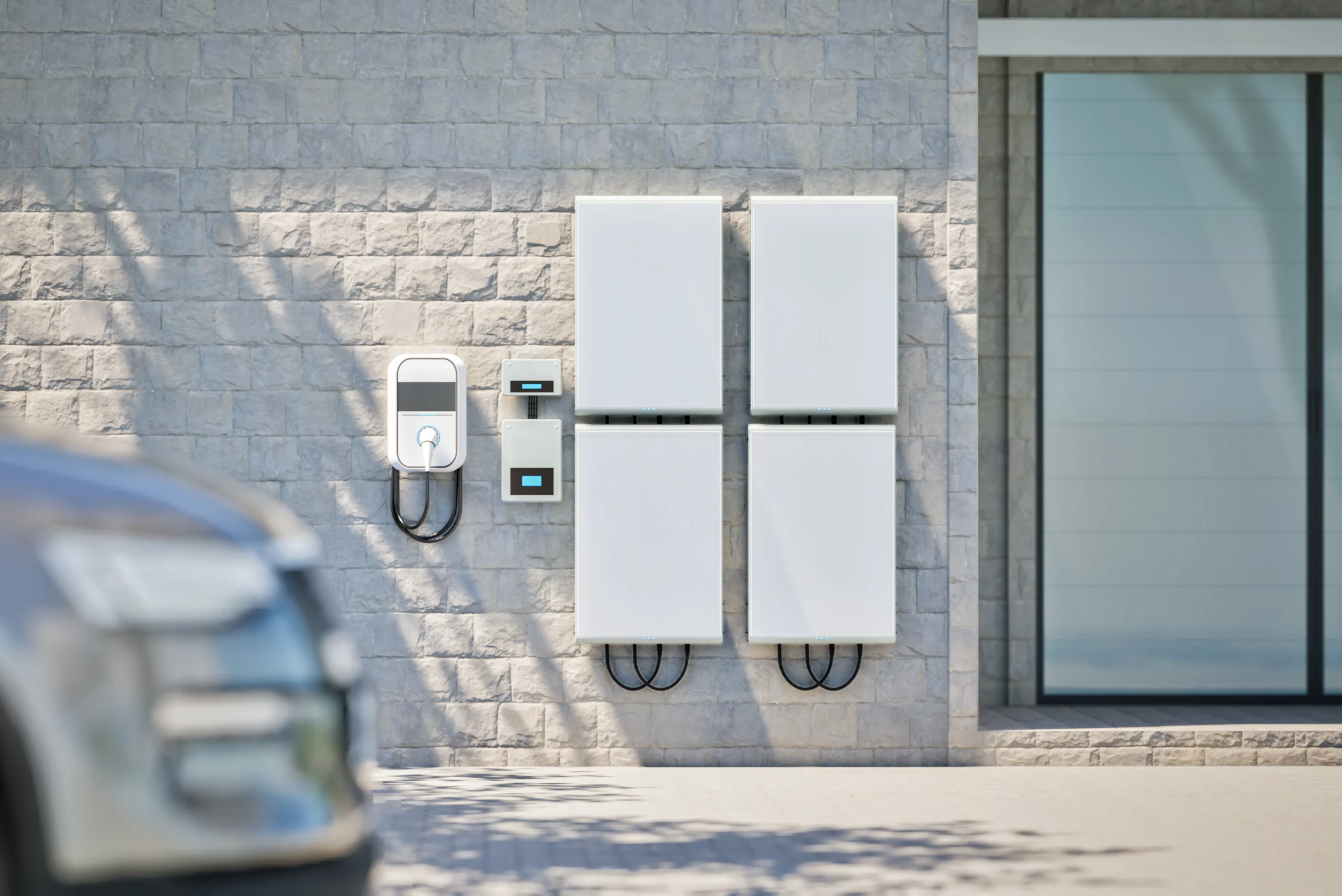
Solar batteries: How they work, what they cost, and whether your home needs one
A solar battery stores the energy your solar panels produce during the day so you can use it at night, during an outage, or whenever grid power is most expensive. Here’s everything you need to know to make a confident decision.
Solar panels are only half the equation. They generate electricity when the sun is out, but most homes use the most power in the evening, and then there’s power outages, and cloudy days when production drops. A solar battery can bridge that gap, storing surplus energy so you can use it on your own schedule rather than the grid’s.
In 2026, batteries have moved from a premium add-on to a central part of most solar decisions. Nearly a third of installers expect more than 75% of their projects to include storage, and only 3% of solar-interested homeowners say they have no interest in battery storage. If you’re researching solar, storage is part of the conversation.
This page is your starting point. It covers the basics of how solar batteries work, what they cost, which brands lead the market, and how to figure out whether one makes sense for your home — with links to our deeper guides wherever you want to go further.
In this article:
- What does a solar battery actually do?
- How do solar batteries work?
- Types of home batteries
- Leading brands at a glance
- What do solar batteries cost?
- Does your home need a battery?
- Going deeper: our full battery guides
- Frequently asked questions
What does a solar battery actually do?
A solar battery stores the electricity your panels produce but your home doesn’t immediately use. Without a battery, that surplus energy gets exported to the grid — and depending on your utility’s net metering policy, you may get paid very little for it. With a battery, you keep it for yourself.
There are three main reasons homeowners add a battery:
Bill savings. In states with time-of-use (TOU) rates, electricity can be significantly more expensive in the late afternoon and evening — right when solar production is tapering off. A battery lets you store midday solar power and use it during expensive peak hours, reducing what you buy from the grid when rates are highest.
Backup power. When the grid goes down, a properly configured solar-plus-battery system keeps your critical items running — lights, refrigerator, Wi-Fi, medical equipment — for hours or days depending on the battery size and how much solar is available to recharge it.
Energy independence. A battery reduces how much your home relies on the grid day-to-day. For homeowners in areas with frequent outages, wildfire-related shutoffs, or rising utility rates, that independence has real value beyond the bill math.
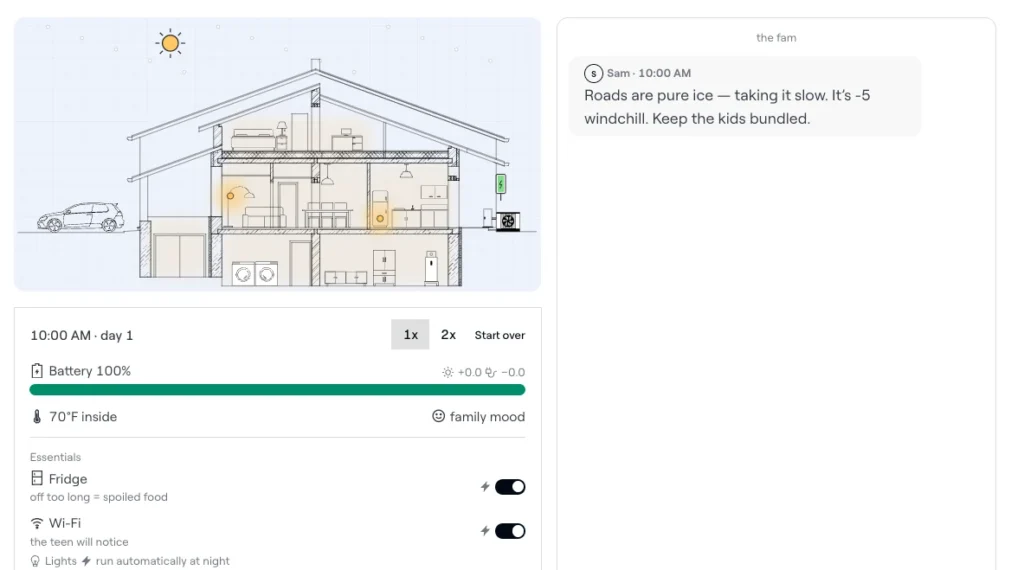
See how a battery can help you manage a power outage by playing Blackout Battle!
How do solar batteries work?
Home batteries store electricity through a chemical reaction. When your panels produce more energy than your home needs, that surplus charges the battery. When you need power — at night, during an outage, or during peak-rate hours — the battery discharges and powers your home.
The technical piece most homeowners encounter is the inverter: the device that converts electricity between the DC format your panels produce and the AC format your home uses. Batteries connect to your home’s electrical system through either:
- DC coupling — the battery connects directly to the solar panels before the inverter, which is more efficient and common in new installations where solar and storage are installed together
- AC coupling — the battery connects on the AC side, which is more common for retrofits added to an existing solar system
Your battery also includes a battery management system (BMS) — software that monitors voltage, temperature, and charge state to protect the battery from conditions that would shorten its life. This is what keeps the battery operating within safe limits and is why firmware updates matter.
Round-trip efficiency is another term you’ll hear from installers. It refers to how much of the energy you put into a battery you actually get back out. Most modern lithium iron phosphate (LFP) batteries operate at 90–97% round-trip efficiency — meaning very little energy is lost in the charge/discharge cycle.
Types of home batteries
Nearly every home battery installed in 2026 uses lithium iron phosphate (LFP) chemistry — a subtype of lithium-ion that has become the residential standard. Here’s how battery types compare:
| Chemistry | Lifespan | Safety | Cost | Common today? |
| Lithium iron phosphate (LFP) | 15+ years, 3,000–10,000 cycles | High — thermally stable | Mid-to-high | Yes |
| Other lithium-ion (NMC) | 10–15 years | Good | Mid | Some older models |
| Lead-acid | 3–5 years | Moderate | Low upfront | Rarely — not recommended |
| Saltwater | 10–15 years | High | High | Niche only |
LFP is the clear choice for new installations. These batteries generally have longer cycle life, better thermal stability, and no meaningful cost disadvantage over alternatives. If a quote includes a non-LFP battery, ask why.
Leading brands at a glance
These are some of the major home battery brands currently available in the U.S. market, based on installed capacity and market share:
| Brand / Model | Capacity | Warranty | Best for |
| Tesla Powerwall 3 | 13.5 kWh | 10 years, 70% retention | Many homes — strong all-around specs, integrated inverter |
| Enphase IQ Battery 5P | 5 kWh/module | 15 years, 70% retention | Enphase solar systems; modular scaling |
| FranklinWH aPower | 13.6 kWh | 12 years, 70% retention | Whole-home backup; longer warranty |
| Generac PWRcell | Up to 36 kWh | 10 years, 70% retention | Large homes; maximum storage capacity |
| SolarEdge Home Battery | 9.7–10 kWh | 10 years, 70% retention | SolarEdge solar systems |
What do solar batteries cost?
Battery costs vary by capacity, brand, installation complexity, and local labor. A few benchmarks for 2026:
- Typical installed cost for a single battery: $10,000–$16,000 depending on brand and home electrical requirements
- Cost per kWh: Most batteries land in the $800–$1,100/kWh range installed
- Multiple units: Whole-home backup often requires 2+ batteries, which increases upfront cost but also available capacity
These costs have been falling steadily, making storage an option for more people. Here are a few things that affect your specific cost:
- Whether you need a main panel upgrade (adds $1,500–$4,000)
- Whether you’re adding a battery to a new solar install vs. retrofitting onto an existing system (new install is typically cheaper per unit)
- State and utility incentives — many states have battery-specific rebates separate from solar incentives; ask your installer what’s available in your area
On tax credits: The 30% federal residential tax credit (25D) for cash and loan purchases expired at the end of 2025 due to the “One Big Beautiful Bill,” which ended the credit that was previously expected to continue through 2032. If you’re financing through a lease or power purchase agreement, the 30% 48E commercial credit still applies to the system owner and is typically reflected in your monthly pricing.
Does your home need a battery?
The answer, of course, depends on your situation.
You’re likely to benefit from a battery if:
- Your utility uses time-of-use rates and charges significantly more during evening peak hours
- You live somewhere with frequent or extended outages — wildfire zones, hurricane country, areas with aging grid infrastructure
- You’re in California under NEM 3.0, where solar export credits are low and storing your own production is now essential to good economics
- You have medical equipment or other critical loads that need to stay on during an outage
A battery may be less urgent if:
- Your utility offers true 1:1 net metering and you rarely lose power
- Your primary goal is bill savings and your rates are flat (no TOU pricing)
- You’re in an early stage of the solar decision and want to start with panels only
Most installers can model the economics of adding a battery based on your specific rate plan, usage, and location. If you’re on the fence, ask for that analysis — it should show you actual projected savings, not just general estimates.
For a full breakdown of when batteries make financial sense, see our guide: Are Solar Batteries Worth the Cost?
Going deeper: our full battery guides
- Are Solar Batteries Worth the Cost? — A detailed look at the economics: when the math works, when it doesn’t, and how to evaluate a quote
- How Long Do Solar Batteries Last? — Warranty terms, degradation, what affects lifespan, and when to replace
- Solar Energy Storage in 2026: Everything You Need to Know — The comprehensive guide to storage in the current policy and market environment
- What Is a Virtual Power Plant? — How your battery can earn money by supporting the grid during peak demand
- Battery Backup vs. Generator — If you’re primarily thinking about outage protection, this comparison is worth reading before you decide
The bottom line
A solar battery isn’t the right fit for every home, but for most homeowners shopping for solar in 2026, it’s worth a serious look. The bill savings case has strengthened as TOU rates spread, the backup power case has strengthened as grid reliability becomes less certain, and the cost case has improved as hardware prices continue to fall.
The best starting point is a quote that models your specific home, rate plan, and usage — not a generic estimate.
See what solar and storage could look like for your home, all in one place.
Frequently asked questions
Q: What is a solar battery?
A solar battery stores electricity generated by your solar panels so you can use it later — at night, during an outage, or during peak-rate hours when grid electricity is most expensive. Most new home batteries use lithium iron phosphate (LFP) chemistry and connect to your home’s electrical system through an inverter.
Q: How long does a solar battery last?
Most modern home batteries carry 10- to 15-year warranties with a 70% capacity retention guarantee. LFP batteries are typically rated for 3,000–10,000 charge cycles and are expected to last 15 years or more with normal use. For the full breakdown, see our solar battery lifespan guide.
Q: How much does a solar battery cost?
A typical home battery installation costs $10,000–$16,000 depending on brand, capacity, and installation requirements. Cost per kWh runs roughly $800–$1,100 installed. State and utility incentives can meaningfully reduce out-of-pocket cost in many areas.
Q: Can a solar battery power my whole house during an outage?
It depends on the battery size and your home’s load. A single 13.5 kWh battery can run essential circuits (refrigerator, lights, Wi-Fi) for 1–2 days without solar recharging. Running central air conditioning or a heat pump significantly increases the load and shortens that window. Whole-home backup typically requires 2 or more battery units.
Q: Do I need a battery to go solar?
No — solar panels work without a battery. Without storage, surplus energy is exported to the grid and you receive a credit through net metering. Whether a battery adds enough value to justify the cost depends on your utility’s rate structure, how often you lose power, and your state’s net metering policy.
Q: What’s the best home solar battery?
The Tesla Powerwall 3 is the most popular home battery, with strong specs, an integrated inverter, and competitive pricing. But the “best” battery depends on your specific solar setup, roof, and goals — the Enphase IQ Battery 5P is better for Enphase systems, the Generac PWRcell can be better for very large homes, and so on.