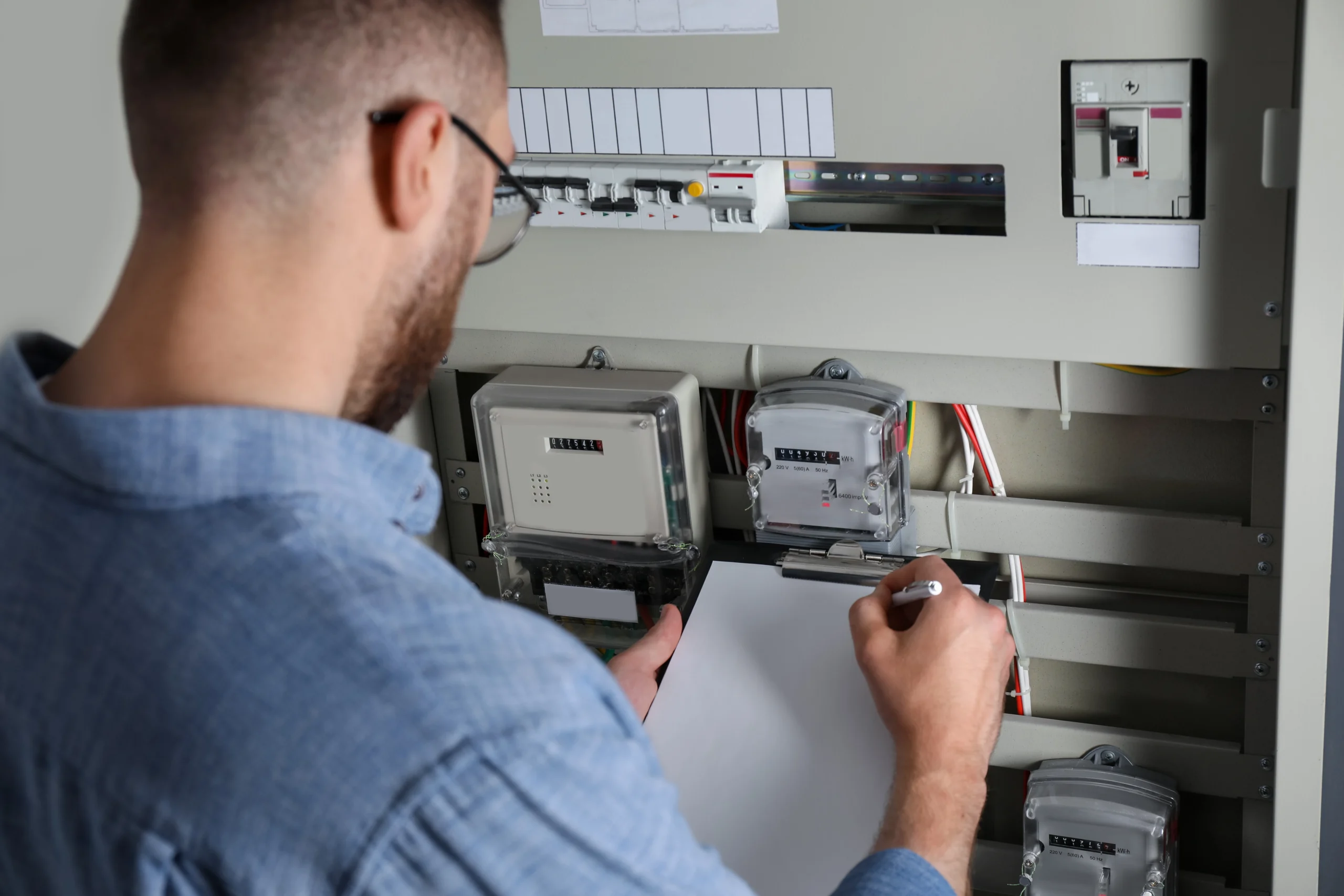
How many watts does it take to run a house?

Understand your home’s energy needs and choose the right power setup
Your home’s energy use adds up fast, but how much power does it really take to keep everything running? Understanding your household’s energy consumption is the first step toward managing costs, improving efficiency, and planning for the right power setup. Whether you’re aiming to lower your utility bill, explore solar options, or prepare for outages, knowing your wattage needs will help you make informed choices.
In this guide, we’ll show you how to assess your energy use, calculate your home’s wattage requirements, figure out how many watts you need to power a house for specific scenarios, and evaluate potential power solutions based on your needs.
Already know your home’s wattage needs? Aurora connects you with vetted local installers — compare multiple quotes in one place. Get solar quotes →
In this article:
- How many watts does an average home use?
- How many watts does it take to power a house?
- Factors that influence your power needs
- How to calculate your home’s power requirements
- What can I run on different wattage levels?
- Consider solar to meet your energy needs
- Backup power during outages
- Frequently asked questions
How many watts does an average home use?
In 2023, the average U.S. residential electricity customer consumed approximately 10,260 kilowatt-hours (kWh) annually, equating to about 855 kWh per month, according to the U.S. Energy Information Administration.
However, annual household electricity use ranges widely across the U.S. — from about 6,000 kWh to nearly 15,000 kWh, or roughly 700 watts to 1,700 watts continuously. Differences in climate, household energy efficiency, and reliance on heating or cooling systems all affect how many watts your house may use. To learn more about kilowatts, read our deep dive on kW vs kWh.
How many watts does it take to power a house?
The short answer: most U.S. homes require between 5,000 and 20,000 watts (5–20 kW) to run at full capacity at any given moment, depending on which appliances are running simultaneously. The national average continuous draw of 1,200 watts reflects usage averaged across an entire day — but your peak demand (when the AC, oven, and dryer all run at once) is much higher.
Here’s a simple way to think about it:
- To power essential loads only (refrigerator, lights, device charging): ~800–1,500 watts
- To power most of a typical home (add HVAC, TV, washer): ~5,000–10,000 watts
- To power a full home at peak demand (AC + oven + dryer running): ~15,000–20,000 watts
This distinction matters for backup power planning. A portable generator, battery system, or solar array sized for your average consumption will not cover your peak demand — which is why understanding both numbers is critical.
Factors that influence your power needs
To choose the right energy solution, it’s important to assess how your appliances, home size, and location affect your daily and seasonal electricity use.Let’s take a closer look at the key factors that influence how much electricity your home uses.
Appliances
Large household appliances such as refrigerators, washing machines, and air conditioning units are significant energy consumers. Typical minimum wattages range from 600-5,000, but we’ll talk more about how to calculate your specific needs below.
Home size
Larger homes require more lighting, heating, and cooling, using more energy. Considering that the median size of a newly built single-family home in the U.S. is approximately 2,200 square feet and the average household electricity consumption is around 900 kWh per month, we can estimate that 0.41 kWh is used per square foot monthly in an average-size home. That means:
- A 1,000 sq ft apartment might use around 410 kWh a month
- A 4,000 sq ft house could consume 1,640 kWh a month
This simplified example provides a general idea of how many watts it takes to run a house. Actual energy usage varies based on climate zone, insulation, HVAC usage, and appliance load/efficiency.
Your location
Climate, weather patterns, and seasonal changes can drastically influence your power needs. Homes in colder regions may require more heating, while those in warmer climates are often cranking the AC.
Average household electricity usage across the U.S.
The national average of ~10,260 kWh/year masks wide regional differences. According to EIA data, states with the highest average household electricity use tend to be in the South (due to heavy AC load), while the lowest-consumption states are in the Pacific Northwest (mild climate, efficient housing stock).
| State (high consumption) | Avg. annual kWh | State (low consumption) | Avg. annual kWh |
|---|---|---|---|
| Louisiana | ~14,700 | Hawaii | ~6,200 |
| Tennessee | ~14,100 | California | ~6,500 |
| Mississippi | ~13,600 | New York | ~6,700 |
| Alabama | ~13,600 | Maine | ~6,900 |
| South Carolina | ~13,200 | Vermont | ~7,000 |
If you’re in a high-consumption state, solar tends to offer stronger bill savings — both because your usage is higher and because utility rates in those regions can be significant. See how solar affects your electric bill →

How to calculate your home’s power requirements
To accurately estimate your home’s energy needs, it’s important to assess the power consumption of your major appliances and devices. Or, just look at your electric bill! By understanding the wattage of each item and factoring in seasonal variations, you can get a clearer picture of your total electricity requirements.
Step 1: Inventory major appliances and devices
Start by listing all significant devices and their wattage. You can find the wattage information on the appliance’s label, in the user manual, or by checking the manufacturer’s website. Then see below for estimates of how much power your appliance draws when operating (measured in watts):
- Microwave: 1,000-1,500 watts
- Dishwasher: 1,200-2,400 watts
- Air conditioner: 900-5,000 watts
- Refrigerator: 150-300 watts
- Washing machine: 500-1,000 watts
- Clothes dryer: 1,800-5,000 watts
- Electric oven: 1,000-5,000 watts
- Television: 50-400 watts
- Furnace blower fan: 400–800 watts
- Electric furnace: 10,000–25,000 watts
- Level 2 EV charger: ~7,200 watts
(Source fypower.org)
Follow these instructions from the U.S. Department of Energy to determine how many watts of electricity your device is using.
Step 2: Calculate total wattage
To calculate your home’s total power usage, your math would end up being:
- Find the wattage of each appliance and multiply that by the number of hours it’s used daily. This includes appliances running simultaneously, such as the refrigerator, lights, air conditioner, and any other electronics you may have on (television, computer, etc.).
- Convert watts to kilowatts.
- Multiply by the number of days in a month to get a good idea of monthly usage, or days in a year to get the annual total for each appliance — but keep in mind that seasonal differences will affect your true usage.
- Add up all the kWh across the appliances.
For example, if you are running the following devices:
- Refrigerator: 300 watts
- TV: 100 watts
- Air conditioner: 3,000 watts
You would add the wattages together to get the total energy consumption per hour:
- 300 + 100 + 3,000 = 3,400 watts per hour (3.4 kW)
Keep in mind that some appliances, like refrigerators and air conditioners, may cycle on and off, so power usage can fluctuate. For a more accurate picture of your home’s monthly energy consumption, consider estimating each device’s average runtime and peak-use hours in your calculations.
Watts vs. watt-hours vs. kWh: It’s worth clarifying the units you’ll see in different contexts. Watts (W) measure instantaneous power draw. Watt-hours (Wh) measure energy used over time: a 100-watt bulb run for 10 hours uses 1,000 watt-hours. Kilowatt-hours (kWh) are simply watt-hours divided by 1,000 — and kWh are what your utility bills you for. So when we say the average home uses 855 kWh/month, that’s 855,000 watt-hours — or roughly 1,200 watts running 24 hours a day. See our full explainer on kW vs kWh.
Step 3: Evaluate seasonal variations
Heating and cooling can significantly impact electricity demand. Heating systems like electric furnaces, space heaters, and heat pumps often run more during the winter months.
In contrast, summer months often lead to increased electricity consumption, as AC units, fans, and cooling systems work harder to combat the heat. Specifically, central air conditioner systems that run continuously can be major energy users.
To adjust your calculations for seasonal differences, review your electric bills across different months to determine an accurate average. If your air conditioner consumes an average of 4,000 watts (4 kW) and runs for several hours a day during hot months, this can add up quickly.

Plan for future energy needs
While calculating your current energy use is important, it’s just as critical to consider what your home may need in the future. Many modern upgrades — such as electric vehicles (EVs), heat pumps, home additions, or even installing a pool — can significantly increase your overall electricity demand.
For example, a typical Level 2 EV charger may draw around 7,200 watts (7.2 kW), while a typical home pool pump can use between 750 and 1,500 watts (0.75–1.5 kW) depending on its size and type. These additions could double or even triple your household’s baseline energy use if not accounted for in your planning.
Factoring in future energy needs now can help you avoid undersizing a solar system or backup power solution later. Even if you’re not ready to invest in upgrades today, having a rough estimate of what’s ahead allows you to make more scalable, cost-effective energy decisions.
What can I run on different wattage levels?
One of the most common questions people have when sizing a backup power system — a generator, a battery, or a solar-plus-battery setup — is not “how much does the average house use?” but rather “what can I run on what I have?” Here’s a breakdown by scenario:
| Scenario | Typical loads | Peak draw | Est. daily kWh |
|---|---|---|---|
| Essential/minimal backup | 2 refrigerators (500W total), LED lights (200W), phone/device charging (100W) | ~800W / 0.8 kW | ~10–12 kWh |
| Minimal backup + furnace blower | Above + furnace blower fan (400–800W) | ~1,200–1,600W / 1.2–1.6 kW | ~15–20 kWh |
| Typical summer load | Central AC (3,000W), fridge (250W), lights (300W), TV (100W) | ~3,650W / 3.7 kW | ~30–40 kWh |
| Typical winter load (electric heat) | Heat pump or electric furnace (3,500–5,000W), fridge (250W), lights (300W) | ~4,050–5,550W / 4–5.6 kW | ~35–50 kWh |
| Full home at peak | AC + electric oven + dryer running simultaneously | ~10,000–15,000W / 10–15 kW | ~35–55 kWh |
The “essential/minimal backup” and “minimal backup + furnace blower” rows are particularly useful for people planning off-grid or emergency power setups. If your goal is to keep two refrigerators running, maintain lighting, and charge devices in summer — and also run a furnace blower fan in winter — you need a system capable of 1,200–1,600 watts (1.2–1.6 kW) of continuous output, with daily energy storage of around 15–20 kWh.
A modest solar-plus-battery system (e.g., 3–4 kW of panels with a 20 kWh battery bank) can cover this scenario comfortably with room to spare. A portable generator in the 2,000–3,000 watt range would also handle the essential loads. The key is knowing your target wattage before you size any system.
Want to calculate your specific load? Use the Aurora Electrification Calculator to build out your appliance list and see what system size fits your needs.
Consider solar to meet your energy needs
Now that you know your home’s wattage needs, you can explore how solar energy can help meet those demands and reduce reliance on the utility grid, lowering both your electricity bills and carbon footprint.
Solar panels generate electricity during daylight hours, often producing more than your home consumes when sunlight is strongest and they are generating the most power. To make the most of that excess energy, you can integrate a battery storage system, which can store surplus power for use at night, on cloudy days, or during brief grid outages.
In many regions, homeowners on Time-of-Use (TOU) electricity plans can also use batteries to reduce costs by shifting consumption away from expensive peak hours. This adds another layer of savings on top of solar generation, especially in areas with high utility rates or demand charges.
While smaller batteries can help manage daily energy use and limited backup, larger-capacity systems may be better suited for homes that need whole-home support during extended outages.
To design a solar system — or a solar-plus-battery setup — tailored to your home’s unique energy needs, both now and in the future, it’s best to work with experienced installers. These professionals can help you evaluate the right equipment and system size for your usage patterns.
Want to compare multiple vetted quotes from trusted installers, all in one place? Compare solar quotes from vetted installers →.
Backup power during outages
If you want to ensure that you have a reliable electricity supply during power outages, extreme weather, or emergencies, you need to have a backup power solution. Depending on the level of backup power you need and the duration of outages, this is what we recommend:
- Portable generators: These are typically used for short-term, emergency situations. They range from 3,000 to 8,500 watts (3–8.5 kW) and are best suited for powering essential appliances like refrigerators, lights, and heating systems. They’re usually fueled by gasoline or propane and can be quickly set up when needed to provide immediate relief during a power outage. Do not operate a generator indoors because it releases carbon monoxide.
- Whole-house generators: A whole-house generator is a more permanent solution. The wattage varies based on home size. Consumer Reports notes that whole-home generators can range from 8,000 to 20,000 watts (8–20 kW), while Lowe’s states that whole-home generators are typically 10,100 watts and above. The bottom line is that a whole-home generator has to have enough wattage to power your entire home, including larger appliances like air conditioners and electric heating systems. They are typically powered by natural gas or propane and automatically kick in when the power goes out.
- Battery systems: These are commonly paired with solar panels but can also serve as standalone backup solutions. While many systems are designed to store excess solar energy for use at night or during short outages, larger battery setups can support whole-home or multi-day backup. Unlike generators, batteries operate silently, produce no emissions, and don’t require fuel — they recharge through solar panels or the grid. Whole-home battery backup typically involves a higher upfront investment and thoughtful planning around system size, load prioritization, and charging strategy. For those considering battery storage beyond short-term needs, it’s a good idea to consult a qualified installer to assess your home’s energy usage and design the right solution.
Sizing backup power for essential loads
Not everyone needs to back up their whole home. If your goal is to keep the lights on, run a refrigerator (or two), and stay warm during a winter outage, your actual wattage requirement is much lower than a full-home generator suggests. Based on the scenario table above:
- A portable generator rated at 2,000–3,500 watts can handle two refrigerators, LED lighting, and device charging simultaneously.
- Adding a furnace blower fan (400–800W) brings the minimum to 1,200–1,600W continuous — well within a 2,000W generator’s capacity.
- A battery system with 15–20 kWh of storage, charged via solar or the grid before an outage, can power these essential loads for 24 hours without a generator.
If a gas furnace is too large to run on backup power (electric furnaces draw 10,000–25,000W), running just the blower fan — which distributes heat from a wood stove or propane source — is a practical and efficient alternative.
Frequently asked questions
What’s the best time to use electricity?
Using electricity during off-peak hours (typically late at night or early morning) can lower costs if you are on a Time-of-Use (TOU) electricity plan from your utility provider. Check with your utility provider for specific time frames and rates.
What are ENERGY STAR appliances?
ENERGY STAR-certified appliances are energy-efficient devices that reduce power consumption without sacrificing performance. Examples of appliances that have ENERGY STAR models include refrigerators, washing machines, and air conditioners.
What size battery do you need to back up your home?
Battery size depends on your energy usage. For example, a 10 kWh battery can support essential loads in smaller homes for about 8 hours (since the average American household uses about 30 kWh per day). 20-30 kWh systems are typically better suited for whole-home backup or longer outages.
What size generator is needed to run a 2,000-square-foot house?
A generator producing 15,000 watts (15 kW) can often power many essential appliances in a 2,000-square-foot home, including a central AC unit, refrigerator, and lights. However, homes with significant electric heating or multiple large appliances may require careful load management or a larger generator. A proper load calculation is recommended.
How many watts does it take to power a house vs. run a house?
These mean the same thing in everyday usage, but context matters. “Running” a house typically refers to average ongoing consumption — around 1,200 watts (1.2 kW) continuously for the typical U.S. home. “Powering” a house in a backup or off-grid context usually means covering peak demand, which can be 5,000–15,000 watts (5–15 kW) when HVAC, appliances, and other loads run simultaneously. For backup power sizing, always plan for peak demand, not average consumption.
How many watts does a furnace use?
It depends on the type. A gas furnace blower fan (the electric motor that circulates air) typically draws 400–800 watts — this is the piece you can realistically run on a modest generator or battery during an outage. A full electric furnace is a different story: these draw 10,000–25,000 watts (10–25 kW), which requires a whole-house generator or a very large battery bank. Heat pumps fall in between, typically drawing 2,000–5,000 watts depending on size and operating conditions. If backup heating during outages is a priority, a gas furnace with an electric blower is the most backup-power-friendly option.
Can I run my whole house on solar?
Yes — many homeowners do. Whether solar can cover 100% of your usage depends on your average daily kWh consumption, your local sun hours, and your system size. A home that uses 30 kWh/day in a region with 5 peak sun hours would need roughly a 6 kW solar array to break even on an annual basis. A battery storage system lets you use solar-generated power at night and during outages. The best way to know if your home is a good fit is to get a customized solar estimate from a qualified installer — they’ll run the numbers against your actual utility bills and local solar data.
How many watts do I need for off-grid or backup power?
For essential backup (refrigerator, lights, device charging): plan for 800–1,500 watts of continuous output and at least 10–15 kWh of daily storage. Add a furnace blower fan and you’re looking at 1,200–1,600 watts continuous and ~15–20 kWh/day. For whole-home off-grid living, the calculation gets more complex — you’ll need to account for seasonal load variation, days of autonomy (how many cloudy days to cover), and appliance efficiency. Working with a solar installer to run a proper load analysis is the most reliable approach.
How many kWh does a house use per day?
The U.S. average is about 28–30 kWh per day (based on 855 kWh/month). But this varies considerably: a small, efficient apartment might use 8–12 kWh/day, while a large home with electric heating and an EV charger could exceed 60 kWh/day in winter. Your utility bill will show your actual monthly kWh — divide by the number of days in the billing period to get your daily average. That daily kWh number is the starting point for sizing any solar or battery system.
How many kilowatts (kW) does it take to run a house?
The average U.S. home draws about 1.2 kW continuously (1,200 watts). At peak — when the AC, oven, and dryer all run at once — that can spike to 5–15 kW. Solar systems are typically sized in kilowatts of panel capacity (e.g., a 6 kW system), while batteries are sized in kilowatt-hours of storage capacity (e.g., a 13.5 kWh Powerwall). These are related but different numbers — your installer can help translate your daily kWh usage into the right system size.