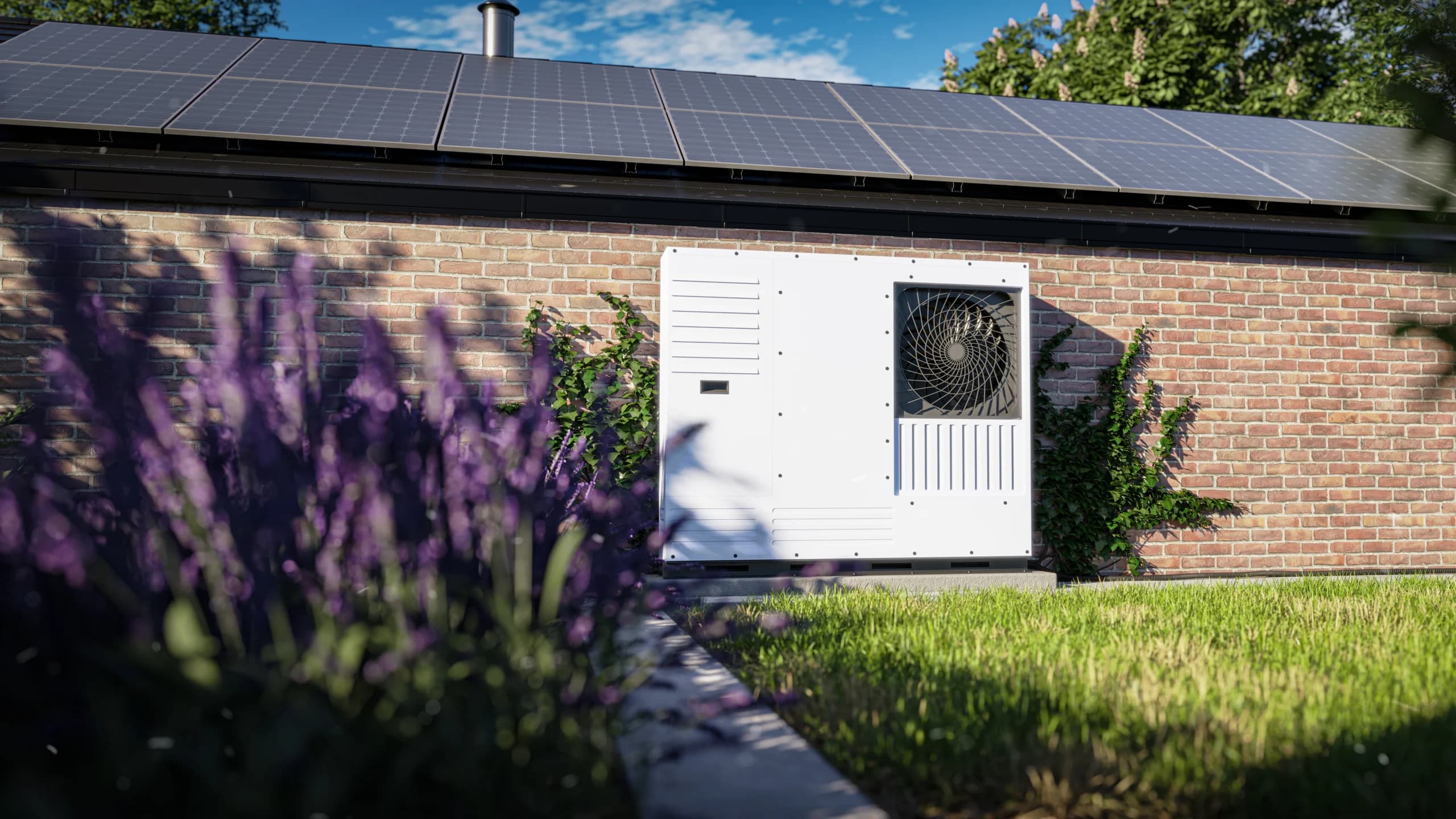
Heat pumps and solar: Two great technologies that work great together
Combining a heat pump with solar can save you hundreds of dollars (or more) on your utility bills.
Listen, we all love heat pumps (or at least we should). They’re efficient. They’re clean. They can even give you extra space back if you currently have one of those furnaces straight out of Home Alone.
If you’re shopping for a heat pump, you’ve probably done the math on what it costs to run one. And it can certainly be cheaper than the boiler-in-the-winter, AC-in-the-summer model. But, have you done the math with solar? Because, wow. The combination can change your total savings picture for the better.
Let’s look at how.
In this article:
- Why heat pumps are worth the switch
- What heating fuel actually costs right now
- The catch: your electric bill goes up
- Enter: solar
- How many panels does it take?
- The incentives picture
- The combined savings case
- Frequently asked questions
Why heat pumps are worth the switch
As a quick primer, a heat pump doesn’t generate heat by burning anything. People will often say it moves heat from outside air (or the ground) into your home. For your typical air-source heat pump, you can think of it as a reversible air conditioner. In the summer it works just like a full-home AC would, cooling your house and blowing the waste heat outside. In the winter, in heating mode, it reverses: It “cools” the outside air, and the heat blows into your house.
Since you’re not burning anything, the efficiency is pretty striking.
The efficiency comparison:
| Heating system | Efficiency | What you get per $1 of energy |
| Electric resistance (baseboard, space heaters) | ~100% (COP 1.0) | 1 unit of heat |
| Gas furnace (high-efficiency) | ~95% (AFUE) | ~0.95 units of heat |
| Air-source heat pump | 200–350% (COP 2.0–3.5) | 2–3.5 units of heat |
| Cold-climate heat pump | 150–300% (COP 1.5–3.0 at extreme cold) | 1.5–3 units of heat even at -15°F |
Even in the worst conditions — deep winter, extreme cold — a modern heat pump still outperforms electric resistance heating. And at typical operating conditions? It delivers 2–3x the heat per unit of electricity.
How? You see, heat pumps aren’t creating heat, per se; they’re moving it. Refrigerators do the same thing in reverse, but to cool the inside of the refrigerator, they create even more hot air that gets blown into the room. So, if you wanted to cool your kitchen down, it’s much more efficient to turn the fridge off than it would be to open the door and let all the cold air out.
What heating fuel actually costs right now
We don’t need to tell you that fuel costs have gone through the roof.
Heating oil:
- National average:
~$3.50/gallon (2026)$5.26 per gallon! Just in the time we’ve been outlining this article, the expected price has jumped that much! - Typical household burns 400–1,000 gallons/winter depending on climate and home size
- Annual heating oil bill: $1,400–$3,500 nationally; $2,500–$4,400 in the Northeast
- More than 80% of oil-heated homes are in the Northeast, where winters are long and oil prices are high. (In Massachusetts, the average price per gallon is $6.12! That’s up from $3.72 at this time last year.)
Natural gas:
- Gas prices are also high due to the energy price spikes of recent years
- A high-efficiency gas furnace costs about $16–17 per million BTU of delivered heat
- A heat pump (COP 3.0) costs about $18–19 per million BTU at national-average electricity rates
- But: in states where electricity-to-gas price ratios are lower, or where you’re generating your own solar electricity, the heat pump wins
Electric resistance heating:
- Baseboard heaters, older electric furnaces, most space heaters: COP 1.0
- At $0.18 per kWh (the national average), it costs about $53 per million BTU
- A heat pump at the same electricity rate costs ~$18/MMBTU, or about one-third the operating cost
Cutting to the chase here: If you’re heating your home with oil, switching to a heat pump will save you money in the overwhelming majority of places. (We can’t technically say every house, but, you saw that bullet up there. $5.26 PER GALLON.)
If you use fossil gas, it really depends on your local utility rates right now. But, a heat pump becomes a clear winner when solar is added to the equation.
And if you’re currently relying on electric resistance heating? A heat pump will essentially cut your heating bill by two-thirds the second you turn it on.
The catch: Your electric bill goes up
Believe us, we were a little surprised when we saw that first December electric bill with our heat pump. It was a lot more than previous winters. But then we remembered, we weren’t getting three heating oil deliveries that month. So our overall energy cost was much lower. Even if that electric bill made us do a double take, not seeing that oil truck pull up to the house even once more than made up for it.
Typical heat pump electricity use:
- Average home, moderate climate: ~4,000–5,500 kWh/year (heating + cooling combined)
- Cold climate, larger home: up to 7,000–8,500 kWh/year
At $0.18/kWh, 5,500 kWh adds roughly $990/year to your electric bill.
So, again, even if it’s much less than what you were spending on oil or gas, it can still be a surprise. And it assumes your utility rate stays flat, which… let’s be honest, it probably won’t.
If only there was something you could do to generate your electricity yourself, without relying on the power company…
Enter: solar
Solar systems are usually sized based on offsetting your usage. And a heat pump is a large, predictable annual load. That makes it one of the best candidates for solar to cover.
Lock that rate in: Electricity rates have risen steadily, and rapidly, for the past several years. A solar system locks in your effective electricity rate for 25+ years. Every kWh your heat pump uses is a kWh you’re not buying from the utility, now or in 2030 or 2035.
The sizing opportunity: Most homeowners size their solar system to offset their current electricity bill. If you know you’re adding a heat pump, let your installer know. They’ll design the system around your future consumption rather than your past bills.
The combined savings:
- Heat pump replaces oil: save $1,400–$4,400 a year on fuel (at the ~$3.50 per gallon rate)
- Heat pump adds electricity: cost $800–$1,500 a year at grid rates
- Solar covers that electricity: eliminate most or all of that cost
- The result: You keep most of the fuel savings and eliminate most of the electricity cost increase
Now we’re there. A heat pump alone can save you money. And it’s likely cleaner and quieter than whatever you’re heating your house with now. But with solar? You can cover all or part of that added electricity use with power you get from the sun rather than at rising rates from the utility.
Homeowners who paired solar with a heat pump five years ago aren’t worrying about whether their utility is raising rates this winter. Wouldn’t we all like to be that person in five years?
Here it’s worth noting that, of course, your solar panels can’t power your heat pump at night. So, it’s important to know the net metering policies in your area, as well as potentially looking at battery storage. Again, a good installer can help you here.
How many solar panels does it take?
Say it with us: It all depends on how much sun your roof gets, where you live, and so on. But, let’s do a little estimate based on some heat pumps’ expected annual consumption.
Back-of-envelope calculation:
| Heat pump load (kWh/year) | Panels needed (at ~1,300 kWh/panel/year) |
| 3,500 kWh (mild climate, small home) | ~3 panels |
| 5,500 kWh (typical) | ~4–5 panels |
| 7,500 kWh (cold climate, larger home) | ~6 panels |
| 8,500 kWh (cold climate, large home) | ~7 panels |
Again, panel output varies by location (sunnier climates produce more per panel) and system design. These estimates use a national average of ~1,300 kWh/year per 400W panel. They are just estimates.
If you’re already going solar to offset your existing electricity bill, adding a heat pump can mean you’d want to add 3–7 panels to the design. Pretty modest cost relative to the fuel savings you’re capturing.
Of course, a trusted solar installer can give you real numbers here. If you share your heat pump specs and expected usage before they finalize the design, they can make sure you’re covered. A good installer will model the combined load and size accordingly, not just your historical utility bills. In fact, many installers now offer heat pumps and other home electrification services, so it pays to shop around.
Want to shop around without giving your contact information? Get multiple estimates in our marketplace with just your ZIP code.

The incentives
Both pieces of this combination potentially come with federal support, though the details matter.
For the heat pump, the 25C tax credit is still active:
- 30% federal tax credit on the cost of a qualifying heat pump
- Maximum credit: $2,000 per year (resets annually, so multi-year upgrades can stack)
- Applies to air-source heat pumps meeting efficiency requirements
- No income limit, available to any homeowner with federal tax liability
- Many state programs
For lower-income households, HEEHRA rebates:
- Up to $8,000 in point-of-sale rebates for a qualifying heat pump
- Income-limited (up to 150% of area median income)
- Availability varies by state (programs administered at the state level)
- Full details: What is HEEHRA? The federal home energy rebate that still exists in 2026
For solar:
- The 30% federal residential solar tax credit (25D) expired at the end of 2025 for homeowners who purchase with cash or a loan
- Third-party ownership (TPO) options like leases and power purchase agreements are backed by the 48E commercial clean electricity credit through 2027, that credit is passed through in the form of lower monthly payments
- Get the full breakdown here: Solar Loan vs. Lease vs. PPA — who actually gets the tax credit
Incentives are constantly evolving. Again, any good installer will be able to walk you through what’s available in your area.
If you’re planning to do a heat pump and solar, it’s also worth talking to a tax advisor about timing. The 25C heat pump credit resets annually, so if you’re doing a phased upgrade, you can potentially claim it across multiple tax years. But for many homeowners, doing both at once means one contractor, one permitting process, and one integrated system design.
The combined savings case
All right, let’s look at another estimate to see just how the savings can add up. This is just a random house in the Northeast (definitely not ours that we put a heat pump and solar on a couple years ago). And again, this is at $3.50 a gallon. Do yourself a favor and check what your actual oil rate is.
Scenario: Northeast homeowner, oil heat, 2,000 sq ft home
| Current (oil + grid electricity) | With heat pump + solar | |
| Annual heating fuel cost | ~$3,200 (oil) | ~$0 (solar-powered heat pump) |
| Annual electricity bill | ~$1,800 (grid) | ~$200–400 (residual grid) |
| Total annual energy cost | ~$5,000 | ~$200–400 |
| Estimated annual savings | — | ~$4,600–4,800 |
Estimates based on ~900-gallon oil consumption at $3.50/gallon; heat pump electricity offset by solar. Actual results vary by home size, insulation, climate, and local utility rates.
OK, you’re probably saying, “But what about the upfront cost?” That’s true. A heat pump plus a solar system can be a big investment. As we’ve seen, there are still a bunch of incentives that can help.
Even discounting incentives, the payback is also real: At $4,600+/year in savings, a combined system that costs $25,000 after incentives has a reasonable payback period, and it can be cash-flow positive on day one. And unlike oil, your solar panels don’t have a price that fluctuates (i.e. rises) with global energy markets.
Get a no-pressure estimate and see what solar could save at your home — heat pump included.

Frequently asked questions
Q: Can solar power a heat pump?
Yes. A properly sized solar system can offset most or all of the electricity a heat pump uses. The typical heat pump consumes 4,000–8,500 kWh/year depending on climate and home size — roughly 3–7 additional solar panels beyond what you’d install to cover your existing electricity usage.
Q: Is it worth getting a heat pump and solar at the same time?
For most homeowners, yes. Doing both at once means fewer contractor visits, integrated system sizing, and the ability to design the solar system around your actual future electricity consumption, which increases when you add a heat pump. Doing them separately can mean undersizing the solar system the first time.
Q: Do heat pumps work in cold climates?
Modern cold-climate heat pumps work down to -13°F to -22°F and maintain a COP of 1.5–3.0 even at extreme temperatures. This is still significantly more efficient than electric resistance heating. States like Maine, Minnesota, and Massachusetts have all seen rapid heat pump adoption despite cold winters.
Q: What federal incentives exist for heat pumps?
The 25C Energy Efficient Home Improvement Credit offers a 30% federal tax credit on qualifying heat pumps, up to $2,000 per year. Lower-income households may also qualify for HEEHRA rebates of up to $8,000. These are separate from solar incentives and can be used together.
Q: Does the solar tax credit still apply if I’m adding solar for a heat pump?
The 30% residential solar tax credit (25D) expired at the end of 2025 for cash and loan purchases. Solar leases and power-purchase agreements are backed by a commercial credit (48E) through 2027, which is typically passed through as lower monthly payments. See our full breakdown: Solar Loan vs. Lease vs. PPA.
Q: How much does a heat pump add to my electric bill?
A typical heat pump can add 4,000–8,500 kWh/year to your electricity consumption. At the national average of ~$0.18/kWh, that’s roughly $720–$1,530 per year in added electricity costs. Solar can offset most or all of that increase, depending on your system size and local conditions.
Q: Is a heat pump cheaper to run than a gas furnace?
It depends on your local electricity and gas rates. At national-average prices, a heat pump (COP 3.0) and a high-efficiency gas furnace cost roughly the same per million BTU of delivered heat. But when you add solar, effectively reducing your electricity cost, the heat pump becomes substantially cheaper to operate.
Sources: EIA residential electricity rates; Shipley Energy / NYSERDA heating oil price data (2026); Palmetto Solar heat pump electricity consumption data; jouleio.com heat pump vs. furnace cost analysis (2026); IRS 25C Energy Efficient Home Improvement Credit guidance; HUD Area Median Income tables (HEEHRA eligibility).